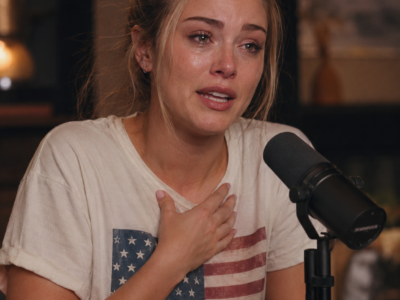
My mother sent me a text while my three-month-old daughter slept in the back seat. “Skip my birthday.
The Break They Asked For
The Break They Asked For
The Break They Asked For
Part 1
My mother’s text arrived while my daughter slept in the back seat.
Skip my birthday. We need a break from your kid.
No emoji. No apology. No gentle explanation pretending to soften the blow. Just those words, flat and cold, glowing on my phone while the heater hummed and rain slid down my windshield in thin silver lines.
Maisie was three months old.
She was bundled in a cream blanket with tiny yellow stars on it, her cheeks warm from sleep, one fist tucked beneath her chin like she had chosen peace on purpose. Her little mouth formed a soft O every few breaths. She had no idea that my mother had just referred to her like an inconvenience.
Your kid.
Not Maisie.
Not the baby.
Not my granddaughter.
Your kid.
I was already halfway to Portland. Four hours from Seattle with a newborn, a diaper bag packed like a survival kit, two bottles in a cooler, extra onesies, wipes, burp cloths, pacifiers, and a birthday gift wrapped in gold paper on the passenger seat.
I had left before sunrise because that was what good daughters did.
At least, that was what I had always believed.
A rest stop sign appeared through the rain. I took the exit before I could think too hard. The parking lot was nearly empty except for two semis and a dented blue sedan. Bare trees shivered in the wind. The sky looked like wet cotton.
I parked beneath a lifeless maple and stared at the message until the words blurred.
We need a break from your kid.
My hands started shaking.
I thought about calling. I could already hear my own voice, too high and too hurt, asking what she meant. Then I could hear my mother sighing, telling me not to be dramatic. I could hear Dad in the background saying, “Jenna, your mother is stressed.” I could hear my sister Brinn telling me I made everything about myself. I could hear my brother Kyle muttering that babies cried and not everyone wanted to deal with that.
And then I would end up apologizing.
Somehow, I always did.
Because I was Jenna. Twenty-seven. The reliable one. The fixer. The daughter who showed up, paid quietly, rearranged her life, and did not make people say thank you.
When Kyle needed three thousand dollars for a startup that became a logo and a dead website, I gave it to him.
When Brinn wanted her wedding to look more expensive than her budget, I paid for the flowers and the photographer.
When my parents panicked over roof repairs last year, I sent five thousand dollars and told them not to worry about paying me back.
They never did.
I had told myself that was family. Family helped. Family sacrificed. Family showed up even when inconvenient.
But apparently my baby was the inconvenience.
Maisie stirred in the back seat and made a tiny sound. I turned around so fast my seat belt locked across my chest. She settled again, her eyelashes dark against her cheeks.
Something inside me went very still.
I opened the message thread.
My thumb hovered for only a second.
Understood. Hope you have a nice birthday.
I hit send.
Then I put the phone face down, shifted the car into drive, and turned around.
The highway north felt longer than the road south. Maybe because every mile back to Seattle was a mile away from a role I had mistaken for love.
Maisie woke once near Olympia. I pulled into a gas station, sat in the back seat with the rain tapping on the roof, and fed her while trucks hissed past on the wet road. Her fingers opened and closed against my sweater, trusting me without question.
“I’ve got you,” I whispered.
She blinked up at me.
That was when I made the promise.
Not to my mother. Not to my family. Not to the version of myself that would have swallowed the insult and kept driving.
To Maisie.
I would never again bring her somewhere she had to be tolerated.
When we reached Seattle, the apartment was dark and cold. I carried her upstairs, changed her, fed her again, and placed her in the bassinet beside my bed. Then I sat on the kitchen floor and finally cried.
My phone buzzed once.
For a wild second, I thought it might be my mother apologizing.
It was not.
It was a message from Brinn.
Mom says you’re being weird. Please don’t start drama today.
I stared at it, and the last soft piece of me toward them cracked.
Because my mother had not just rejected us.
She had already started editing the story.
Part 2
I did not answer Brinn.
That was the first small miracle.
Old Jenna would have explained. She would have typed a careful paragraph saying I was hurt but not trying to cause drama, saying I understood birthdays were stressful, saying maybe we could talk later. Old Jenna would have cushioned the truth so no one else had to land on it too hard.
New Jenna placed the phone on the counter and walked away.
Maisie’s bassinet sat in the corner of my bedroom beneath the window. The streetlight outside drew a pale yellow stripe across her blanket. She slept with both arms raised over her head like she had surrendered to the whole world and found it safe.
I stood there watching her.
I thought of Derek, her father, who had disappeared before she was born with a sentence so clean it almost sounded reasonable.
“I’m not ready for this.”
This.
Not fatherhood.
Not our daughter.
This.
He left slowly enough that people called it complicated instead of abandonment. Fewer calls. Shorter texts. Missed appointments. Then nothing.
When I told my family I was keeping the baby, my mother pressed her lips into a thin line and said, “Well, you chose this situation.”
That sentence had never left me.
Chosen this situation.
As if Maisie were a punishment I had selected from a menu.
The first person to act happy for me had been Vanessa, my best friend. She came to the apartment with soup, prenatal vitamins, fuzzy socks, and a stack of baby name books. She sat on the floor beside me while I cried and said, “This baby is already loved. Start there.”
After my mother’s birthday text, Vanessa called that night.
“You okay?” she asked.
I made it three seconds before crying.
I told her everything. The drive. The rest stop. The exact words. The four-word reply. The silence afterward. Brinn’s message.
Vanessa did not say maybe my mother had been overwhelmed. She did not offer excuses dressed up as wisdom.
She said, “They are punishing you for being a single mom.”
I wiped my face with the sleeve of my sweatshirt. “I know.”
“And they’re punishing Maisie because they can’t punish Derek.”
That one hit harder.
I looked toward the bedroom. “She hasn’t done anything.”
“Exactly.”
My mother’s birthday came and went.
I sent no gift.
No flowers.
No card.
No midnight text.
For the first time in my life, I let a family occasion pass without performing affection for people who had not shown me any.
No one called to ask if I was okay after driving halfway to Portland and turning around.
No one asked if Maisie was okay.
No one apologized.
The silence was not peaceful. It was informative.
The next weekend, I took Maisie to Green Lake. The trees were bare, the path damp, the sky pale and wide. I pushed her stroller slowly, passing joggers, dogs, couples holding coffee cups. Maisie stared up at the branches as if winter had hung art above her.
I felt sad.
But I did not feel guilty.
That difference mattered.
Thanksgiving approached with grocery ads, office small talk, and social media posts about gratitude. My family said nothing. No invitation. No “what are your plans?” No passive-aggressive “you know you’re welcome.” Nothing.
Then Vanessa called the Tuesday before Thanksgiving.
“Do not say no until I finish.”
“That is never a comforting opening.”
“Remember Lauren? My friend with the wellness company?”
I shifted Maisie on my shoulder. “The rich one?”
“The generous one,” Vanessa corrected. “She rented a private lodge in Montana for Thanksgiving. Two couples canceled. She wants us to come. You and Maisie too. Flights covered. Private chef. Lake view. Snow. The whole movie version.”
I laughed because it sounded unreal. “Vanessa, I can’t.”
“You can.”
“I have a baby.”
“I told her. She said babies are welcome.”
Welcome.
The word moved through me like warmth.
Not tolerated.
Not endured.
Welcome.
I looked down at Maisie. She had fallen asleep against my chest, trusting me with the full weight of her tiny body.
“Okay,” I whispered. “We’ll go.”
On Wednesday, Lauren’s assistant sent flight details. On Thursday morning, a black SUV picked us up from the airport in Bozeman. Maisie slept through most of the ride, bundled against the cold, while snow-dusted pines blurred past the windows.
The lodge stood beside a frozen lake, all glowing windows, stone chimney, and smoke curling into a gray sky. It looked like something from a luxury magazine, the kind I used to flip through at salon waiting rooms and never imagine touching.
Lauren opened the front door herself.
Before she greeted me, her whole face lit up at Maisie.
“Oh my goodness,” she said. “May I hold her?”
Not reluctantly.
Not for a photo.
With delight.
I handed Maisie over, and my daughter smiled at her like she understood the difference.
Inside, the lodge smelled like cedar, cinnamon, and roasting garlic. Warm blankets lay over deep leather chairs. A toddler named Cameron toddled over and tried to offer Maisie a wooden block. When she didn’t take it, he looked personally offended.
Everyone laughed.
No one sighed.
No one said, “Is she always like this?”
That night, as snow began falling softly over the lake, I realized something that made my throat ache.
Strangers had made more room for my daughter in ten minutes than my family had in three months.
And the next morning, I would learn they had made room for me too.
Part 3
Thanksgiving morning at the lodge began with the smell of coffee and woodsmoke.
I woke to Maisie making little grunting noises beside the bed, the kind that meant she was considering whether to cry or simply request service through facial expressions. The room was warm from the fireplace. Outside the tall windows, the lake lay frozen and pale beneath a sky turning pink at the edges.
For a moment, I forgot to feel unwanted.
That was new.
I fed Maisie in bed, one hand cupping the back of her head, and listened to muffled laughter downstairs. Someone was chopping vegetables. Someone else was playing old Motown low through a speaker. Cameron was yelling “turkey” over and over like it was a magical spell.
When I came downstairs, Beth immediately stood from the couch.
“Do you want coffee or do you want someone to hold the baby while you get coffee?”
I stared at her.
She smiled. “Both is also an option.”
That almost undid me.
The day unfolded without anyone making me feel like an interruption. Lauren’s husband Marcus adjusted the heat in my room because he worried Maisie might be cold. Simone brought me a blanket before I knew I needed one. Rosa, the private chef, asked if I wanted dinner plated later if I got caught feeding the baby during the meal.
It was such practical kindness that I did not know where to put it.
Dinner was served at a long wooden table under iron chandeliers. Candles flickered in glass jars. Snow pressed against the windows. The food looked too beautiful to touch: herb-roasted turkey, truffle mashed potatoes, maple carrots, cranberry relish bright with orange peel, stuffing rich with sage, rolls shining with butter.
I sat with Maisie against my shoulder, breathing in rosemary and smoke and warm bread.
Lauren raised her glass. “I know gratitude circles are cheesy, but I’m doing one anyway.”
People laughed.
When my turn came, I felt Vanessa’s knee gently bump mine under the table.
I looked down at my daughter. Her lashes rested against her cheeks. A tiny milk bubble clung to her lower lip.
“I’m grateful,” I said, my voice careful, “for people who make room.”
Silence settled, but not an awkward one.
Vanessa squeezed my hand.
Lauren’s eyes softened. “To chosen family.”
“To chosen family,” everyone echoed.
The words entered me quietly and stayed.
After dinner, the others went out to the hot tub. I stayed inside with Maisie, not because I had been left out, but because I was warm and full and happy to sit by the fire. Rosa brought me a second plate without asking.
“You fed everyone else before yourself,” she said. “Mothers do that. Eat.”
I laughed because I didn’t know how to cry politely over mashed potatoes.
The next morning, before we left, I took one photo of the frozen lake reflecting the sunrise. The sky was pink, the lodge windows gold, the snow untouched except for deer tracks near the trees.
I posted it when we got back to Seattle.
One word.
Grateful.
No location tag. No people tagged. No explanation.
Two days later, my phone started exploding.
Mom: Why didn’t you tell us you were going there? We thought you were spending Thanksgiving alone.
Brinn: Wow. Must be nice to afford luxury vacations while some of us are struggling.
Kyle: So you’re too good for family now?
Dad: Your mother is very upset you didn’t even mention your plans.
I stared at the messages while Maisie kicked happily on her play mat, attacking a stuffed elephant with both fists.
They had not invited me.
They had not asked my plans.
They had told me to skip Mom’s birthday because they needed a break from my kid.
And now they were offended I had not reported my joy to them for approval.
Then my mother sent the message that turned disbelief into something sharper.
I looked up that lodge. Places like that cost thousands a night. If you have that kind of money, remember your family. We could really use help with property taxes this year.
There it was.
Not sorry.
Not how is Maisie.
Money.
They saw one picture of me being treated well and their first instinct was to reach for my wallet.
My hands went cold.
I opened the family group chat.
I didn’t pay for that trip, I typed. A friend invited me because she wanted Maisie and me there.
You told me to skip Mom’s birthday because you needed a break from my kid. You didn’t invite us to Thanksgiving. You didn’t ask if we were okay.
But the second you saw one picture of me happy, you asked for money.
I’m done being the family ATM. I’m done forcing my daughter into rooms where she is treated like a burden.
Maisie and I deserve better.
I sent it.
Then I muted the chat and picked up my baby.
For an hour, I refused to look.
When I finally did, there were thirty-seven new messages.
And one private text from my father that made my stomach drop.
Jenna, your mother says you promised to cover the taxes months ago. Did you?
Part 4
I had not promised to cover the property taxes.
I had not even known they were due.
But the message from my father told me my mother had already started building a new version of the story, and in that version I was not hurt. I was irresponsible.
I called him before fear could talk me out of it.
Dad answered on the second ring.
“Jenna,” he said, tired already.
“I never promised to pay property taxes.”
Silence.
Then, “Your mother said—”
“I know what she said. I’m telling you the truth.”
In the background, I heard a cabinet close. My mother’s voice asked something I couldn’t make out.
Dad lowered his voice. “She said you told her after the roof repair that if things ever got tight again, you’d help.”
“That is not a promise. That is what people say when they are exhausted from being asked for money.”
He sighed.
The sound made something hot flare in my chest.
“No,” I said. “Do not sigh like I’m making this difficult.”
“I’m not.”
“You are.”
Another pause.
Maisie fussed in her bouncer. I picked her up and held the phone between my shoulder and ear, her warm weight pressing against me.
Dad said, “Your mother feels blindsided.”
I laughed once. “She texted me not to come to her birthday because she needed a break from my three-month-old baby.”
“I know.”
“Do you?”
He didn’t answer.
That silence was familiar. Dad’s silence had always worked like a soft wall. It never hit you, but it stopped you from getting anywhere.
I walked to the window. Rain slid down the glass. Across the street, a woman struggled with grocery bags while her little boy jumped in puddles.
“Did you know she sent it?” I asked.
The line went quiet.
My pulse shifted.
“Dad.”
He exhaled slowly. “I knew she was upset about the visit.”
“That’s not what I asked.”
“I saw the text after.”
“After she sent it?”
“Yes.”
“And you said nothing?”
He sounded smaller when he answered. “I didn’t want to make it worse.”
I closed my eyes.
That was my father’s whole life philosophy. Let the wound stay hidden and call that healing.
“It was already worse,” I said.
Maisie grabbed a strand of my hair and tugged. I let the pain ground me.
Dad said, “Your mother thought maybe if you had some space, you’d understand how hard this has been for everyone.”
“This?”
“The situation.”
There it was again.
Situation.
My daughter had become a word people used when they did not want to say baby.
I shifted Maisie higher. “What exactly is hard for everyone? You see her maybe once a month.”
“She worries about you.”
“No. She judges me.”
“She’s from a different generation.”
“She knows how not to call a baby a burden.”
His silence changed. I knew I had hit truth.
Then he said, very quietly, “Your mother is scared that you won’t have anything left for the family now.”
I froze.
That was the first honest thing anyone had said.
Not that Maisie cried too much.
Not that visits were overwhelming.
Not that being a single mom was shameful.
My mother was scared that my money, time, energy, and loyalty had been redirected to my child.
I swallowed. “Thank you for finally saying it.”
“Jenna—”
“No. That’s what this is. Maisie didn’t take up too much room in your lives. She took up room in mine, and you all resented losing access.”
He did not deny it.
After we hung up, I sat on the couch with Maisie asleep on my chest. Her breath warmed my collarbone.
My phone buzzed again.
This time, it was an email notification from my bank.
Payment attempt declined.
Merchant: Multnomah County Tax Office.
Amount: $4,612.87.
Card ending in 1039.
My old emergency card.
The one I had once given my mother to use when my father was in the hospital three years ago.
The card I had forgotten she still had saved.
I stared at the screen until the apartment blurred.
Then another message came from Mom.
If you had just answered, I wouldn’t have had to try.
Part 5
I called the bank first.
My voice shook, but not from confusion. Confusion had burned away. What remained was clean anger, bright enough to see by.
The woman on the fraud line asked calm questions. I answered them while Maisie slept in the bassinet beside the couch.
Was the card in my possession?
Yes.
Had I authorized the payment?
No.
Did I know the person who attempted it?
I closed my eyes.
“Yes,” I said. “My mother.”
The word felt unreal.
Not because I believed mothers were incapable of betrayal. I knew better by then. But because some part of me still expected betrayal to look dramatic, not like a declined tax payment and a message blaming me for not being easier to access.
The card was canceled. A new one would be issued. The attempted charge was flagged. The representative’s voice stayed professional, but toward the end she softened.
“You may want to remove any saved payment methods from shared devices or family accounts.”
Family accounts.
That phrase almost made me laugh.
After the call, I changed passwords. Bank. Email. Phone plan. Streaming services. Grocery delivery. Cloud storage. Anything my family had ever touched.
Each changed password felt like sliding a deadbolt into place.
Then I called Vanessa.
She came over with Thai food, a bottle of sparkling water, and the expression of a woman ready to commit socially acceptable violence.
“She tried to pay taxes with your card?”
“After texting that it was my fault.”
Vanessa stood in my kitchen, still wearing her hospital scrubs under a winter coat. “Jenna.”
“I know.”
“No, I need you to hear me. This is not normal family mess. This is financial abuse wearing a cardigan.”
I laughed because if I didn’t, I would cry again.
We sat on the floor while Maisie lay between us on a blanket, kicking her legs like she was conducting an orchestra. Vanessa ate noodles straight from the container and helped me make a list.
Cancel card.
Change passwords.
Pull credit report.
Screenshot messages.
No money.
No unsupervised visits.
No access to Maisie.
No negotiation when people used guilt instead of respect.
That night, after Vanessa left, I looked through old bank statements.
I told myself I was only checking whether there were other charges I had missed. But really, I was looking at the shape of my life in numbers.
$3,000 to Kyle.
$1,800 to Brinn’s florist.
$2,400 to Brinn’s photographer.
$5,000 to my parents’ roof contractor.
$600 here.
$900 there.
Emergency.
Help.
Just this once.
Family.
The total made me sit back.
Over six years, I had given them almost twenty-one thousand dollars.
Not counting gifts. Not counting travel. Not counting days off work. Not counting the emotional tax of being needed but not cherished.
At midnight, my phone buzzed.
A message from Kyle.
Mom is crying because you froze the card. You’re taking this too far.
I stared at it.
Then another from Brinn.
Do you know how embarrassing this is? Dad had to call the tax office.
Then Mom.
After everything we did raising you, this is how you repay us?
I typed one message to the group chat.
You tried to charge my card without permission after insulting my daughter and asking me for money. Contact me again about money and I will handle it formally.
No one answered for five minutes.
Then Dad texted privately.
Did your mother really try the card?
I stared at it, stunned.
He didn’t know.
I sent him the bank screenshot and Mom’s message.
For twenty minutes, nothing.
Then he replied.
I’m sorry. I need to understand what else she has done.
My breath caught.
Because that was not denial.
That was a door opening.
Before I could respond, another message came through.
Not from family.
From Derek.
Your mom reached out. We need to talk about Maisie.
The room seemed to tilt.
My mother had gone from my wallet to my child’s absent father.
And suddenly the declined tax payment felt like only the first move.
Part 6
I had not heard from Derek in four months.
Not when Maisie was born.
Not when I sent one final photo because some stubborn, stupid part of me thought seeing her face might wake something human in him.
Not when medical bills arrived.
Not when I learned how to hold a newborn and cry quietly at the same time.
But after my mother lost access to my money, Derek texted within twenty-four hours.
Your mom reached out. We need to talk about Maisie.
I stared at the message while the apartment seemed to shrink around me.
Maisie slept in her swing, one sock half off, her tiny chest rising and falling with the peace of someone who had no idea adults could be this selfish.
I did not answer Derek.
I called Vanessa again.
She said, “Do not engage until you know what he wants.”
“He wants what my mother told him to want.”
“Exactly.”
The next morning, I found out what that was.
Derek sent a longer message.
Your mom says you’re overwhelmed and cutting everyone off. I don’t want drama, but if you’re unstable, maybe Maisie should have more support from my side.
I read it twice.
Then I laughed.
Not because it was funny.
Because my mother had chosen the one word she knew could scare people.
Unstable.
A single mother setting boundaries became unstable. A daughter refusing unauthorized charges became unstable. A woman protecting her baby became unstable.
I took screenshots.
Then I called a family law attorney whose number Vanessa got from a coworker. Her name was Marla Chen, and she had the calmest voice I had ever heard.
“Has he established paternity legally?” she asked.
“No.”
“Has he provided support?”
“No.”
“Has he met the child?”
“No.”
“Has he expressed interest before now?”
“No.”
Marla paused. “Then we document everything and respond carefully.”
Carefully.
I had lived too long being careful with everyone else’s feelings. This was different. This was careful like locking doors.
I spent the next three days gathering proof. Derek’s old messages. His disappearance. My mother’s text. The attempted tax payment. The family group chat. Every money transfer I had made over the years.
The documents formed a story I had been too tired to tell while living inside it.
When Dad called again, I almost didn’t answer.
But I did.
He sounded rough. “Your mother contacted Derek.”
“I know.”
“She said she was worried about you.”
“She said I was unstable.”
He was quiet.
I waited.
This time, he did not defend her.
“I’m sorry,” he said.
“Sorry doesn’t fix what she just did.”
“No. It doesn’t.”
That was the first time he did not ask me to soften my anger.
“What do you want, Dad?”
He inhaled. “I want to know if you and Maisie are safe.”
The question landed somewhere I had not protected well enough.
“Yes,” I said. “No thanks to you.”
“I know.”
I looked toward the window. Rain tapped the glass, soft and relentless.
He continued, “I found something in your mother’s email.”
My skin prickled.
“What?”
“She and Brinn have been discussing how to get you to come home for Christmas.”
“I’m not coming.”
“I know. But Jenna… they wrote that if they could make you feel isolated enough, you would ‘remember who your real family is.’”
The words slid into me like ice.
Isolated enough.
My mother had not sent one cruel text in frustration.
She had begun a campaign.
Dad’s voice broke slightly. “I think the birthday text was part of that.”
I sat down slowly.
Maisie stirred in the swing, her little face scrunching before settling again.
Dad said, “There’s more. Brinn told your mother not to invite you for Thanksgiving. Kyle agreed. They thought if you spent the holiday alone, you’d apologize first.”
I could not speak.
He added, very quietly, “They didn’t expect you to be happy somewhere else.”
There it was.
The truth under every message.
They had tried to starve me emotionally, expecting me to crawl back grateful for crumbs.
Instead, I had been fed at another table.
My phone buzzed again while Dad was still on the line.
A new message from Mom.
Christmas is family. Don’t punish Maisie just because you’re angry.
I stared at the words until they blurred.
Then I realized what made me angriest was not that she had used Maisie.
It was that she still thought I would let her.
Part 7
I did not go to Portland for Christmas.
I flew to California with Vanessa instead.
Her family lived in a rambling house outside Sacramento with orange trees in the backyard and too many cousins to count. I expected to feel awkward. Like a guest. Like someone folded into a holiday out of pity.
Instead, Vanessa’s mother opened the door, took one look at Maisie, and shouted, “The baby is here!”
Not Jenna.
Not Vanessa’s friend.
The baby.
As if Maisie were the headliner everyone had been waiting for.
Within ten minutes, my daughter had been admired by three aunties, blessed by someone’s grandmother, and given a tiny red sweater that made her look like a strawberry. Nobody asked where her father was. Nobody asked why I wasn’t with my own family. Nobody treated my life like a cautionary tale.
At dinner, Vanessa’s mother placed me between herself and an aunt named Lucia who kept adding food to my plate every time I looked away.
“You are too skinny,” Lucia said.
“I had a baby three months ago.”
“Exactly. Eat.”
I ate.
I laughed.
I slept for five uninterrupted hours because Vanessa and her sister took a night shift with Maisie and refused to discuss it.
In the morning, I woke panicked, then found my daughter in the kitchen being rocked by Vanessa’s father while he sang an off-key Christmas song to her with complete seriousness.
Maisie looked delighted.
I stood in the doorway wearing borrowed pajamas, and for the first time since she was born, I felt something close to rest.
My phone stayed mostly silent because I had blocked Mom, Brinn, and Kyle the night before Christmas Eve.
Dad remained unblocked.
He texted once.
I hope you and Maisie are somewhere warm.
I replied with a photo of Maisie in the strawberry sweater.
He wrote back:
She’s beautiful. I’m sorry I didn’t protect you both sooner.
I did not answer.
An apology was not a bridge by itself. It was only wood delivered to the riverbank.
In January, Derek disappeared again after Marla sent one formal response.
That told me everything I needed to know. He had not wanted fatherhood. He had wanted leverage, and when leverage required paperwork, he lost interest.
My mother tried two more unknown numbers. Brinn sent an email titled “You’re tearing this family apart.” Kyle left one voicemail saying, “You know Mom didn’t mean it like that,” which proved he still thought meaning mattered more than impact.
I saved everything.
Then, in February, Uncle Frank called.
Frank was my father’s older brother and the only person in my family who had never asked me for money, favors, or emotional translation. He had been a therapist for thirty years and had the unsettling habit of listening so carefully that people confessed things just to fill the silence.
“I heard parts,” he said. “I’d like to hear yours.”
So I told him.
The birthday text. The Montana lodge. The property tax attempt. Derek. The email about isolating me. The years of money.
He did not interrupt.
When I finished, he said, “They trained you to confuse usefulness with belonging.”
The sentence hit like a door opening in a dark house.
“Yes,” I whispered.
“And now that you have a child, your usefulness is naturally redirected. They are experiencing that as betrayal.”
I looked at Maisie sleeping beside me, her hand curled around the edge of her blanket.
“What do I do?”
“Protect the child,” Frank said. “And the woman raising her.”
That became my rule.
Protect the child.
Protect the woman raising her.
In March, Lauren invited us back to Montana for a spring weekend. This time I almost said no out of reflex, then stopped myself.
We went.
The lake had thawed around the edges. Snow melted from the roof in glittering lines. Maisie had grown rounder, louder, more opinionated. Lauren held her on the porch and said, “This girl knows she’s loved.”
I looked at them and realized something quietly enormous.
She did.
She would not remember my mother’s text. She would not remember the rest stop or the financial threats or the way people tried to use her as a rope around my neck.
But she would remember the life I built after.
When we returned to Seattle, there was a letter in my mailbox.
No return address.
Inside was a single printed screenshot from my mother’s email.
Brinn had written:
If Jenna thinks those rich people are her family now, let them pay for her life. She’ll come back when the baby gets hard.
Underneath, my mother had replied:
She always comes back.
I stood in the hallway holding the page while Maisie babbled in her stroller.
Then I folded it once, very neatly, and put it with the others.
They were wrong.
This time, I wasn’t coming back.
Part 8
Spring made Seattle softer.
Cherry blossoms opened along the sidewalks. Rain smelled less like cold metal and more like soil. Maisie began laughing with her whole body, a bubbling sound that made strangers smile in grocery lines. She learned to roll over and looked deeply offended every time she ended up on her stomach.
Life did not become easy.
It became mine.
I returned to work part-time, then full-time remote three days a week. Vanessa came over every Wednesday. Lauren, who insisted generosity was only awkward if I made it awkward, connected me with a financial planner who helped me separate my accounts, rebuild my emergency fund, and set up a small college account for Maisie.
“You don’t need to be rich,” the planner told me. “You need to stop leaking money into other people’s emergencies.”
I almost laughed at the accuracy.
Dad visited once in April.
I agreed to meet him at a café, not my apartment. Maisie stayed with Vanessa. I needed to speak as myself first, not as a mother holding a baby everyone could use to soften the room.
Dad looked older when he walked in. His hair had more gray at the temples. He wore the blue jacket he always wore when he wanted to seem casual but serious. In his hands was a folder.
I did not stand to hug him.
He noticed.
Good.
He sat across from me and placed the folder on the table. “These are records of what we owe you.”
My eyebrows rose. “We?”
“Your mother and me. Some of it was for the house. Some I didn’t know about at the time, but that doesn’t remove responsibility.”
I opened the folder.
A spreadsheet.
Dates. Amounts. Reasons. Notes.
Roof repair. $5,000.
Kyle startup loan. $3,000.
Brinn wedding flowers. $1,800.
Photographer. $2,400.
Emergency transfers. $8,700.
At the bottom, a total.
$20,900.
My throat tightened.
Not because of the money.
Because someone had finally counted.
Dad said, “I can’t repay it all at once.”
“I didn’t ask you to.”
“I know. But I need to say this clearly. We took from you.”
I looked at him.
He did not look away.
That mattered. Not enough, but it mattered.
“I’m not here to ask for forgiveness,” he said. “I’m here to stop pretending.”
The café hissed with the sound of steamed milk. A woman near the window laughed into her phone. Outside, a bus sighed at the curb.
I closed the folder.
“Mom know you’re here?”
“Yes.”
“And?”
“She thinks I’m choosing sides.”
“Aren’t you?”
He nodded slowly. “I suppose I am. I’m choosing the truth.”
I wanted that to feel better than it did.
Instead, it made me tired.
“Dad, I’m not ready to give you access to Maisie.”
His face changed, but he controlled it. “I understand.”
“Do you?”
“Yes.” His voice was rough. “I don’t like it. But I understand.”
He slid a check across the table.
First repayment: $1,000.
I stared at it.
“I’m not buying my way back,” he said quickly. “I know I can’t. This is separate.”
I believed that he wanted it to be.
I was not sure he fully understood how separate things needed to remain.
I took the check.
“Thank you.”
His eyes filled.
That was all I gave him.
As I left, he said, “Jenna.”
I turned.
He looked like he wanted to say I love you.
Instead, he said, “Keep protecting her.”
That was the first fatherly thing he had said in years.
I cried in my car for twelve minutes before driving home.
Two days later, Mom sent a letter.
Not an apology.
A six-page explanation.
She wrote about how hard it was to watch me struggle, how scared she was for my future, how painful it felt to be shut out, how I had misunderstood her tone, how grandmothers sometimes needed space too, how family should not keep score.
At the bottom, she added:
Your father says he’s paying you back. I hope you’re happy turning him against me.
I folded the letter and put it in the evidence folder.
Then I wrote one sentence on a blank piece of paper.
Do not confuse contact with repair.
I taped it inside my closet door.
Every morning, while getting dressed, I saw it.
And every morning, I believed it a little more.
Part 9
The first real family ambush happened in June.
Brinn showed up at my apartment building with a casserole.
I saw her through the lobby glass before she saw me. She stood under the awning in a cream coat, hair curled, makeup perfect, holding a ceramic dish covered in foil like a peace offering from a lifestyle blog.
For one second, my body forgot I had changed.
My first instinct was to open the door.
My second was to protect my child.
I stayed inside.
Brinn spotted me and lifted the casserole with a hopeful little smile.
“Jenna,” she called through the glass. “Can we talk?”
Maisie shifted in the stroller, chewing on a rubber giraffe. I looked down at her, then back at my sister.
“No.”
Her smile faltered.
“Please. I drove three hours.”
“I drove four with a newborn after Mom told me to turn around. Distance doesn’t create obligation.”
Her mouth opened.
Closed.
Then her face changed. The softness drained out. “So this is who you are now?”
“Yes,” I said. “This is who I am now.”
The security door remained locked between us.
Brinn’s eyes flicked to Maisie. “Can I at least see my niece?”
“You are seeing her.”
“That’s cruel.”
“No. Cruel was calling her a burden and then using her to guilt me.”
“I never called her a burden.”
“You agreed with people who did.”
Her face reddened.
I could smell the casserole even through the small gap near the door when someone exited behind me. Cheese. Garlic. Something warm and heavy.
Food had always been my mother’s favorite apology language. Feed the wound. Never name the knife.
Brinn looked past me, embarrassed as another resident walked by.
“Jenna, people are staring.”
“They’ll survive.”
Her eyes hardened.
“You’re enjoying this.”
I almost smiled.
There it was. The family translation machine. Boundaries became cruelty. Clarity became drama. Refusal became revenge.
“No,” I said. “I’m busy raising my daughter.”
Maisie dropped the giraffe. I picked it up, wiped it on my shirt, and handed it back.
Brinn watched the small movement with something like envy.
“You think you’re better than us because you have rich friends now.”
“No. I think I’m safer because I have honest ones.”
That landed.
Her face crumpled, but I had learned not to move toward every tear.
“Mom’s falling apart,” she whispered.
“Then Mom needs help I cannot provide.”
“She misses Maisie.”
“She has not earned Maisie.”
Brinn stared at me as though I had spoken another language.
Maybe I had.
A healthy one.
She left the casserole outside the lobby door. I did not take it. By the time I returned from my walk, it was gone.
That night, Kyle called from an unknown number. I answered because I was tired, and tired people make mistakes.
“You made Brinn cry,” he said.
“Brinn drove to my home uninvited.”
“She was trying.”
“She was trying to bypass my no.”
He scoffed. “You sound like one of those therapy accounts.”
“Good. Maybe you should read one.”
He went quiet for a moment, then said, “Mom says Dad is sending you money.”
“It’s repayment.”
“For what? Stuff you gave freely?”
I looked at Maisie playing on the rug. She was trying to crawl and mostly rocking in place with intense frustration.
“No,” I said. “For money you all took for granted.”
“You always act like you’re the victim.”
I felt no need to defend myself.
That was new too.
“Kyle, do not call me again.”
“You can’t cut off your whole family.”
“I already did.”
I hung up.
Ten minutes later, Dad texted.
Brinn told them where you live. I told them not to come. I’m sorry.
I stared at the message, and the old fear rose.
My apartment no longer felt invisible.
That night, after Maisie fell asleep, I applied to transfer to a larger unit in a secured building Vanessa had found near her hospital. It cost more. It was worth it.
Before bed, I checked the locks twice.
Then I stood over Maisie’s crib and watched her sleep.
My mother had asked for a break from my kid.
I was giving them one.
A permanent one.
Part 10
We moved in August.
The new apartment was on the fourth floor of a brick building with a secure lobby, thick windows, and a little balcony that faced west. In the evenings, sunlight came through the living room in long golden rectangles, turning Maisie’s toys into tiny glowing islands across the rug.
Vanessa helped me unpack. Lauren sent a ridiculous housewarming basket with coffee, baby snacks, a candle I was afraid to light because it smelled expensive, and a note that read: For the home you chose.
I taped that note inside a kitchen cabinet.
Dad kept sending repayments.
Five hundred here. Seven hundred there. Always with a note in the memo line: repayment. Never gift. Never help. Never strings.
I deposited the checks into a savings account for Maisie.
Not because I owed him a symbolic redemption.
Because money taken from my life would now serve hers.
Mom sent letters until I marked one return to sender.
Then they stopped.
For two months, silence returned.
But this time, silence did not feel like punishment.
It felt like space.
Maisie turned one in September.
I held her birthday party at a park near the water. Vanessa brought balloons. Lauren brought a cake shaped like a yellow duck because Maisie was obsessed with ducks and screamed “duh” every time she saw one. Beth made a playlist. Simone took photos. Rosa, who had somehow become part of our lives after Montana, sent empanadas and a card covered in little hearts.
Maisie wore a blue dress and smashed cake into her hair with the concentration of a scientist.
She was surrounded by people who clapped when she clapped. People who laughed when she squealed. People who made room on blankets, in arms, in conversation.
At sunset, as we packed up, Vanessa asked, “Do you wish they were here?”
I knew who she meant.
I looked at Maisie sitting in the grass with frosting on her chin and joy all over her face.
“No,” I said.
And I meant it.
That night, after Maisie fell asleep, I opened an email from Dad.
Subject: I need to tell you something.
My chest tightened.
The message was short.
Your mother knew about the property tax attempt before she tried it. Brinn encouraged her. Kyle said you’d cave if they made it urgent. I didn’t know until after. I am not saying this to excuse myself. I should have known who we had become.
There was an attachment.
A screenshot from a group chat I had never seen.
Mom: She has always needed to feel needed. We just have to remind her.
Brinn: Use the baby. She gets defensive about Maisie, but she also doesn’t want people thinking she’s failing.
Kyle: Tell her taxes are due now. She hates emergencies.
Mom: She’ll be mad first. Then she’ll pay.
I read the messages until my body went cold.
Then I read them again.
She’ll pay.
Not she’ll help.
Not she’ll care.
She’ll pay.
I thought of every family dinner where I had washed dishes while Brinn sat at the table scrolling. Every birthday where Kyle forgot gifts but remembered to ask for favors. Every phone call where Mom began with “How are you?” and reached money by minute four.
Dad sent one more line.
I’m sorry I gave you proof instead of protection.
I sat in the dark living room, phone in hand, while the baby monitor crackled softly beside me.
There are moments when grief becomes clean.
Not easy. Clean.
I finally understood that they had not simply failed to love me well.
They had studied my love and turned it into a tool.
The next morning, I wrote three letters.
One to Brinn.
One to Kyle.
One to Mom.
They were not emotional. They were not long.
Do not contact me again. Do not come to my home. Do not attempt to contact my daughter. Any further harassment will be documented and handled through appropriate channels.
I did not say I hope you understand.
I did not say maybe someday.
I did not say love.
Dad got a different message.
Thank you for the proof. I accept repayment, not relationship. Do not share information about me or Maisie. If you do, contact ends completely.
He replied:
Understood.
For once, no one argued.
And that quiet told me they knew exactly what they had done.
Part 11
The first year after cutting them off felt like learning to walk through my own life without leaning toward an invisible demand.
At first, I kept expecting emergencies.
A late-night call. A surprise visit. A guilt-loaded message from some aunt. A cousin asking why I was hurting my poor mother. Every buzz of my phone made my shoulders jump.
Then weeks passed.
Then months.
My nervous system slowly learned what my mind had already decided: I was no longer available for extraction.
Maisie grew.
She walked two weeks after her first birthday, wobbling across the living room toward Vanessa with both arms up and a look of wild disbelief on her face. Vanessa cried. I cried. Maisie fell on her diapered bottom, looked offended, then tried again.
“She’s stubborn,” Lauren said later, watching the video.
“Good,” I said. “I hope she stays that way.”
I changed too.
Without family emergencies draining my account, I paid down medical bills. I rebuilt savings. I took a certification course through work that I had postponed twice because someone else always needed money first. I started sleeping better. Not perfectly, because Maisie still believed 4:30 a.m. was a reasonable time to discuss life, but better.
Vanessa once found me staring at my bank app and smiling.
“What?” she asked.
“I have an emergency fund.”
She placed one hand over her heart. “That is the sexiest sentence I’ve ever heard.”
I laughed until I cried.
Dad kept sending money for fourteen months.
He never asked to see Maisie. Never asked for a call. Never sent updates about Mom unless I asked, which I didn’t. His checks arrived quietly, consistently, like a man trying to repay a debt without demanding emotional interest.
When the total reached the amount from his spreadsheet, he sent one final letter.
Jenna,
The money is repaid. The harm is not. I know that. I will respect whatever silence you need. I love you, and I am sorry I spent too long being gentle with the wrong people.
Dad.
I read it twice.
Then I put it in the folder.
I did not forgive him.
But I believed that sentence.
Both could be true.
Mom tried once more when Maisie was almost three.
A birthday card arrived in a pink envelope with no return address. Inside was a glittery card with a cartoon bear and a handwritten message.
Grandma loves you. Mommy is just angry right now, but someday she’ll understand family.
My hands shook so badly I had to set it down.
Not because I was tempted.
Because the audacity still had teeth.
I photographed it, saved it, and mailed it back inside a larger envelope with a note.
Do not contact my child again.
Three days later, Dad texted.
I did not give her your address. Brinn found an old package label. I’m handling it.
I replied:
This is your warning too. If anyone contacts Maisie again, you are blocked.
He wrote back:
I understand. I’m sorry.
I believed he was.
I also changed my mailing address to a private box the next day.
That night, Maisie climbed into my lap with a board book about animals. She smelled like strawberry shampoo and graham crackers. She pressed her warm little back against my chest and pointed at a duck.
“Duh,” she said proudly.
“Yes,” I whispered. “Duck.”
She turned the page.
No fear. No understanding that somewhere out there, adults who shared her blood had once discussed using her as pressure.
That was my victory.
Not revenge.
Not proving my mother wrong.
This.
My daughter safe enough to mispronounce duck in a home where nobody treated her existence as negotiable.
When she fell asleep, I stayed in the rocking chair long after my arm went numb.
I thought about the rest stop. The bare tree. The text that felt like a verdict.
It had not been a verdict.
It had been a warning flare.
I was lucky I listened.
Part 12
When Maisie was five, she asked me why we had “family friends.”
We were driving back from Vanessa’s house after Sunday dinner. Rain tapped the roof. Maisie sat in the back seat wearing yellow boots and holding a stuffed elephant named Bean, who had somehow survived toddlerhood with only one ear permanently bent.
“What do you mean, baby?”
“Like Auntie V,” she said. “And Lauren. And Rosa. They’re family, but not like blood family. So they’re family friends.”
I looked at her in the rearview mirror.
Her face was serious. Five-year-olds have a way of making philosophy sound like a weather report.
“Family can be made in more than one way,” I said.
“By loving?”
“Yes. And by showing up.”
“And snacks?”
I smiled. “Snacks help.”
She nodded, satisfied.
She did not ask about my mother.
She knew Dad existed because I had shown her one photo when she asked why my eyes looked like hers and his. I told her he was my father, that he had made mistakes, and that we were not close. That was enough for now.
I did not tell her about the birthday text.
Not yet.
Children deserve truth in portions they can digest.
That winter, Dad asked to meet.
Not Maisie.
Me.
His text was careful.
I will be in Seattle for work. I would like to have coffee if you are open to it. No expectations.
I stared at it for a long time.
Then I said yes.
We met at a café near the water. He looked older again. Grief and accountability had carved lines into his face. He did not try to hug me. He waited for me to sit first.
“How is she?” he asked.
I knew who he meant.
“Happy.”
His eyes shone. “Good.”
We talked for forty minutes. Work. Weather. His consulting. My promotion. Neutral things with small openings.
At the end, he said, “Your mother and I separated.”
I looked up.
He nodded, eyes on his coffee. “I should have done it years ago, maybe. But after everything, I couldn’t keep living inside the same excuses.”
I felt something, but not triumph.
Maybe sadness.
Maybe nothing.
He continued, “She still says you overreacted. She still says you embarrassed the family. She still says she would have come around if you had just been patient.”
I almost laughed.
Patient.
The word people use when they mean, Let me keep hurting you at my preferred pace.
Dad looked at me. “I’m not telling you to upset you. I’m telling you because I don’t want to pretend she understands.”
“Thank you.”
He nodded.
Then he said, “Would you ever consider letting me send Maisie birthday gifts? Through you. Only if you approve them.”
I looked out the window at the gray water.
There was a time when that request would have made me melt. He was trying. He was respectful. He had repaid the money. He had named the harm.
But my daughter was not a reward for adult remorse.
“No,” I said.
His face tightened, but he accepted it.
“Okay.”
“That may change when she’s older and can decide for herself. But not now.”
“I understand.”
I believed he did.
That was the strange part.
He understood, and the answer was still no.
When I got home, Maisie ran to me with a drawing from school. It showed three stick figures: me, her, and Vanessa. Above us she had drawn a huge yellow sun.
“This is our team,” she said.
Our team.
I put the drawing on the refrigerator.
Later, after she slept, I wrote in the notebook I had started after Montana. It was not a journal exactly. More like a record of the life I was building on purpose.
I wrote:
Forgiveness is not the price of peace.
Then I sat with that sentence until I believed it.
By the time Maisie started kindergarten, my family of origin had become a place I no longer visited, physically or emotionally. Sometimes grief knocked. Usually around holidays. Sometimes when Maisie did something funny and I thought, My mother could have known this version of her.
Then I remembered.
My mother had known the first version.
Tiny. Warm. Three months old. Asleep in a car seat on the way to Portland.
And she had asked for a break.
So I gave her one.
I gave them all one.
And I kept driving toward a better life.
Part 13
Maisie is eight now.
She has a gap where one front tooth used to be, a laugh loud enough to startle birds, and an opinion about everything from pancake shape to the emotional lives of worms on sidewalks. She loves yellow, hates mushrooms, reads under the covers with a flashlight, and calls Vanessa “Auntie V” with the casual certainty of a child who has never doubted she belongs.
She knows family as the people who show up.
That is the inheritance I chose for her.
Not guilt.
Not obligation.
Not the exhausting performance of being easy to love.
On her eighth birthday, we rented a picnic shelter at a park overlooking the water. Vanessa hung paper lanterns. Lauren brought cupcakes from a bakery that wrote Maisie’s name in frosting with tiny sugar ducks. Rosa made enough food for thirty people even though there were twelve of us. Marcus taught the kids how to skip rocks badly. Beth organized a treasure hunt. Simone took photos.
I watched Maisie run across the grass in yellow sneakers, hair flying behind her, shouting with joy.
At one point, she came barreling into me and wrapped both arms around my waist.
“This is the best day,” she declared.
I kissed the top of her head. “Good.”
After cake, Vanessa stood beside me while the kids chased bubbles.
“You okay?” she asked.
I smiled. “Yes.”
She studied me the way only a best friend can. “Really?”
I looked around at the table. The people laughing. The presents piled on one bench. The sunlight on the water. My daughter being loved without anyone keeping score.
“Really.”
The next morning, a letter arrived at my private mailbox.
The handwriting was my mother’s.
For years, I had imagined this moment would make my heart race. Instead, I felt almost calm as I opened it in my car.
Jenna,
I saw a photo of Maisie online through someone from Brinn’s account. She looks like you. I know you hate me. I know you think I was cruel. Maybe I was. But I am still your mother, and she is still my granddaughter. I am getting older. I don’t want to die without seeing her.
Please stop punishing everyone.
Mom.
I read it once.
Then again.
There was no apology.
No mention of the text.
No mention of the card she sent to Maisie.
No mention of trying to use Derek, or the tax payment, or the group chat, or the years of taking.
Just entitlement wearing mortality like perfume.
I folded the letter and sat in the car for a while.
The old pain was there, but faint now. Like hearing music from another apartment.
I took out a blank card from the glove compartment. I kept them there because Maisie was always needing thank-you notes for school things.
I wrote:
You asked for a break from my kid.
I honored your request.
Do not contact us again.
Jenna.
I mailed it before I could make it kinder.
That evening, Maisie and I made pancakes for dinner because birthdays deserve aftershocks. She poured too much batter and created a shape she insisted was a dragon. The kitchen smelled like butter and syrup. Rain tapped against the window, soft and familiar.
“Mom,” she said, mouth full, “what makes someone family?”
I paused.
Maybe some part of her had heard the question moving in me all day.
I sat across from her and answered carefully.
“Family is people who love you with respect. People who make room for you. People who are safe when life is hard, not just when it’s easy.”
She considered that.
“So Auntie V is family.”
“Yes.”
“Lauren too.”
“Yes.”
“Rosa?”
“Definitely.”
She nodded seriously. “Bean is family.”
I looked at the one-eared elephant lying on the chair beside her.
“Bean is very important family.”
Maisie smiled and went back to her pancake dragon.
I watched her, this child who had once slept through a text meant to shrink her. She would never know what it felt like to be called a burden by people she was taught to trust. She would never be trained to buy belonging. She would never watch me hand over our peace to keep cruel relatives comfortable.
That was not because life had been gentle.
It was because I had chosen.
I chose the turn at the rest stop.
I chose silence over begging.
I chose boundaries over approval.
I chose to let people call me selfish rather than teach my daughter that love meant swallowing disrespect.
I did not forgive my mother.
I did not forgive Brinn.
I did not forgive Kyle.
Maybe forgiveness helps some people. For me, freedom helped more.
Dad still sends a card once a year addressed only to me. No pressure. No requests. Sometimes I read them. Sometimes I don’t. He made his choices, and I made mine. Not every regret earns a place at the table.
The photo from Montana still hangs in my hallway.
A frozen lake. Pink sunrise. A lodge full of warmth I had not known I was allowed to receive.
Under it, in a small frame, I keep one sentence I wrote years ago:
We go where love makes room.
Every time Maisie runs past it, every time she leaves her shoes in the hall or laughs too loudly or asks for one more story, I know I did the right thing.
My mother wanted a break from my kid.
So I built my kid a life without her.
And in that life, there is no empty chair waiting for people who only notice us when they need something.
There is only our table.
Warm.
Crowded.
Chosen.
Full.