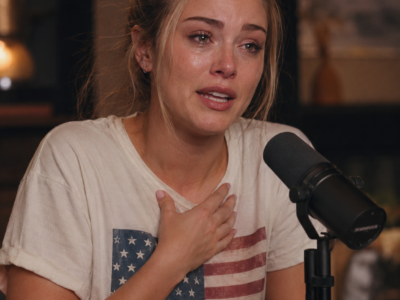
Part 2: My father left me a voicemail at 6:40 in the morning saying, “You’re out. Don’t come back.
The Fourth-Floor Window
The Fourth-Floor Window
Part 1
The first thing I noticed after giving birth was the smell of hospital soap.
It was sharp and lemony, too clean to be comforting, clinging to the plastic bracelet around my wrist and the stiff sheets tucked under my knees. The second thing I noticed was the silence. Not total silence, of course. Hospitals never really sleep. Somewhere down the hall, a cart squeaked. A monitor beeped in a room beside mine. A nurse laughed softly at the station.
But inside my recovery room, for the first time in almost eighteen hours, nobody was asking me to breathe, push, turn, sign, drink, or rate my pain from one to ten.
My daughter, Natalie, slept in the clear bassinet beside me, wrapped like a tiny burrito in a pink-and-blue blanket. Her lips moved in her sleep as if she was dreaming about milk she had not yet learned how to ask for. James, my husband, had stepped out five minutes earlier to get coffee from the cafeteria. He kissed my forehead before he left and whispered, “Ten minutes. I swear.”
I remember thinking ten minutes was nothing.
Then the door slammed open so hard the metal handle punched the wall.
My mother walked in first.
Lorraine Montgomery never entered a room quietly. Even at sixty-one, she moved like she expected a camera crew to follow her. Her cream coat swung around her knees. Her oversized sunglasses sat on top of her head though it was a rainy March morning. Behind her came my sister Veronica, already talking, one hand inside her purse, the other gripping her phone like a weapon.
My brother Kenneth followed, broad shoulders filling the doorway. My father, Gerald, came last and shut the door.
That click did something to my stomach.
“Mom?” My voice sounded scraped raw. “What are you doing here?”
Veronica did not look at Natalie. She did not ask how I was. She did not even pretend.
“We need your credit card,” she said.
I blinked at her. For one foolish second, I thought the pain medicine had made me mishear.
“What?”
She pulled a folded paper from her purse and snapped it open. “My anniversary party. The Grandview Estate needs the deposit by tomorrow morning. Travis and I have been married ten years. Ten years, Emily. I’m not doing some backyard barbecue like poor people.”
My mother sighed like I was already embarrassing her. “Sweetheart, don’t start. Family helps family.”
“I just had a baby,” I said. “Four hours ago.”
“And congratulations,” Veronica said, waving one manicured hand toward the bassinet without looking at it. “But this is time-sensitive.”
“How much?” I asked, even though I knew I should not.
“Eighty thousand.”
The number landed between us like a dropped tray.
I stared at her. My stitches hurt. My head throbbed. Natalie made a soft sighing sound in her sleep, and something inside me sharpened.
“No.”
Veronica’s eyes narrowed. “Excuse me?”
“I said no.”
My mother’s mouth tightened. “Emily, don’t be ugly.”
“I paid for Veronica’s wedding,” I said. “I paid off her car. I gave you money for your kitchen renovation that somehow became a cruise. I’ve given this family more than enough.”
Dad glanced at the floor.
Kenneth crossed his arms.
Veronica stepped closer to my bed. Her perfume hit me, sweet and powdery, the same scent she wore to funerals and Christmas Eve, the scent that always meant she wanted attention.
“You think you’re better than us because you married James and bought that little house?” she said.
“No. I think my money is mine.”
Her face changed.
It was so quick that later, when police asked me to describe it, I struggled. One second she was angry. The next she was empty.
Then her hand shot out and grabbed my hair.
Pain tore through my scalp. I gasped, one hand flying up too late. Veronica yanked my head back and slammed it into the metal bed rail. A bright white crack exploded behind my eyes. I screamed.
The door burst open. Two nurses rushed in.
“Let go of her!” one shouted.
Kenneth moved in front of them. “This is family business.”
Then I saw my mother.
She was beside the bassinet.
“Mom,” I whispered.
She lifted Natalie.
My whole body went cold.
The nurse tried to move around Kenneth. Dad put up one hand, not touching her, just blocking enough.
“Lorraine,” he said, almost bored, “don’t make this messy.”
My mother walked to the window.
The recovery rooms on the fourth floor had safety latches. Everyone knew that. But my mother forced the latch with both hands while holding Natalie against her shoulder. The window opened wider than it should have. Wet spring air rushed in, carrying the smell of asphalt and exhaust from the parking lot below.
Natalie woke and began to cry.
“Give us the card,” my mother said calmly, “or I’ll drop her.”
For a second, the whole world became that window.
My newborn daughter, my mother’s hands, the gray sky beyond them.
I heard myself screaming for security. I heard Veronica breathing hard beside my ear. I heard a nurse calling into her radio.
Then the door burst open again, and James came in behind three security guards, his coffee spilled down his shirt, his face going white.
And in that terrible second, I realized my family had not come for money only.
They had come prepared to take something I could never replace.
Part 2
James did not hesitate.
I had seen my husband angry before, usually in quiet ways. A clenched jaw during a bad phone call. A hand pressed flat against the kitchen counter after another bill from my family appeared in our mailbox. But I had never seen him move like he did that morning.
He hit Kenneth from the side with his whole body.
My brother stumbled into the wall, knocking down the laminated breastfeeding chart taped there. One of the security guards grabbed Kenneth’s arm. Another went straight toward my mother, both hands raised, voice low and steady.
“Ma’am, step away from the window.”
Natalie’s cry became thin and furious. That sound carved through me.
My mother pulled her closer to the opening.
“Don’t touch me,” she snapped. “She’s my granddaughter.”
“She is an infant patient in danger,” the guard said. “Hand her to the nurse now.”
Veronica still had my hair twisted in her fist. I could feel strands ripping loose every time I moved. The nurse beside me reached over the bed rail and pressed the emergency button again and again. Red light flashed above the door.
“Let go,” I whispered.
Veronica bent close enough for me to see foundation settled in the lines around her mouth. “You always make everything difficult.”
The guard by the window shifted his weight. My mother’s eyes flicked toward him.
That was when Nurse Patel moved.
She was small, barely over five feet, with silver-streaked hair pulled into a tight bun. She slid between my mother and the window so smoothly I almost missed it. One hand closed around Natalie’s blanket. The other cupped the back of my daughter’s head.
“Lorraine,” Nurse Patel said, as if speaking to a skittish animal, “give me the baby.”
My mother looked at her. Then at me.
Her expression was not wild. That was what made it worse. She looked annoyed, like I had forced her to behave badly in public.
“Emily,” Dad said from near the door, “just give them what they want.”
The room went quiet enough for me to hear rain tapping the window frame.
I stared at him.
“She’s holding my baby over a fourth-floor drop,” I said.
He looked away. “Don’t exaggerate.”
That sentence did something permanent.
Veronica’s grip loosened just enough for me to jerk away. My skull throbbed. Warmth trickled behind my ear. James shouted my name, but another guard was pulling him back from Kenneth, who had blood under his nose and panic in his eyes.
Nurse Patel took Natalie.
Not grabbed. Not snatched. Took.
My mother’s hands opened, and my baby passed from danger into the nurse’s arms. I sobbed so hard my stomach cramped. The nurse brought Natalie to me immediately, checking her breathing, her color, her tiny fists. I clutched my daughter against my chest and smelled milk, blanket cotton, and the faint powdery scent of her newborn skin.
Police arrived before I stopped shaking.
Two officers entered with the tired, serious expressions of people who had seen families at their worst. Everyone started talking at once.
Veronica shouted that it was a misunderstanding.
Kenneth said he was trying to keep strangers out of private matters.
Dad said my mother had only been “making a point.”
My mother said nothing.
She stood by the wall with her cream coat open and her sunglasses still on her head, staring at me like I had betrayed her.
The older officer held up one hand. “One person at a time.”
A doctor came in and shined a light in my eyes. “Can you tell me your name?”
“Emily Montgomery Carter.”
“Do you know where you are?”
“Memorial Hospital.”
“What happened?”
I looked past him to my mother.
“She threatened to drop my baby,” I said. My voice broke on baby.
The officer wrote that down.
They separated us. James stayed close enough for me to see him, but not close enough to touch. I watched the police take statements from the nurses. I watched security point toward the window. I watched Veronica gesture dramatically, her mouth moving fast.
Then I watched my mother finally speak.
I could not hear everything, but I saw the officer’s eyebrows lift.
A few minutes later, four sets of handcuffs clicked.
Veronica screamed first.
“You can’t arrest me. She’s my sister.”
Kenneth cursed.
Dad tried to reason, his voice slipping into the smooth salesman tone he used when he wanted a waiter to remove charges from a bill.
My mother only looked at me.
As the officer guided her toward the door, she paused.
“You think this is over?” she asked.
James stepped between us. “Don’t speak to her.”
My mother smiled a little. Not enough for anyone else to notice, maybe. But I noticed.
Then Veronica twisted around, hair falling over her face, mascara streaked under one eye.
“You stupid little princess,” she hissed. “You don’t even know what you just uncovered.”
The door closed behind them.
And suddenly the money, the party, the credit card—none of it felt like the real reason they had come.
Part 3
Hospitals have a way of swallowing time.
Morning became afternoon in pieces. A CT scan. A fresh gown. Ice wrapped in a towel. A social worker with kind eyes asking whether I felt safe at home. A patient advocate explaining that the hospital would cooperate fully with law enforcement. A detective taking photographs of the red swelling near my hairline and the scratches on my wrist.
Natalie slept through most of it, tucked against my side like she had decided the safest place in the world was under my chin.
James did not leave again.
His coffee dried in a brown stain across his shirt. His hands shook every time he touched Natalie’s blanket. When his parents arrived that evening after driving three hours through rain, his mother, Vivian, started crying before she reached my bed.
“Oh, honey,” she whispered.
I expected pity. I hated pity.
But Vivian wiped her eyes, set her purse down, and became practical. “Ronald, talk to security. No one gets up here without Emily’s approval. James, you need food. Emily, I’m going to hold my granddaughter for exactly three minutes while you drink water.”
I handed Natalie over because my arms were trembling.
Watching Vivian hold her was like watching a door open into a room I had never been allowed inside. She did not make the baby about herself. She did not announce what title she expected to be called. She simply looked down at Natalie and said, “You are safe now, little girl.”
Safe.
The word made me cry harder than the pain.
By midnight, the police had confirmed charges. Veronica for assault. Kenneth for obstruction and interfering with medical staff. Dad for accessory and failure to help. My mother for child endangerment, reckless endangerment, and assault.
Child endangerment.
The phrase looked unreal on the paper the victim advocate gave me.
“Given the circumstances,” she said, “the judge granted an emergency protective order. They cannot contact you, your husband, or your daughter.”
“My daughter is one day old,” I said.
The advocate’s face softened. “I know.”
The next morning, my phone began to vibrate.
At first, I thought it might be people checking on us. Word travels quickly in families, especially ours. My mother had four siblings, my father had three, and everyone had opinions. I opened the first message with one hand while Natalie nursed.
It was from Aunt Teresa.
You should be ashamed. Your mother is in jail because you couldn’t just help your sister.
I stared at the screen until the words blurred.
Another message came.
From Uncle Roger.
Families handle things privately. You let strangers humiliate your own blood.
Then Cousin Bethany.
Grandma Ruth is sick over this. Hope you’re happy.
James took the phone out of my hand.
“I’ll deal with it,” he said.
“You can’t block everyone.”
“I can try.”
For the next two days, he answered calls in the hallway. I heard fragments.
“No, she is not dropping charges.”
“Yes, the baby was threatened.”
“No, I don’t care what Lorraine says happened.”
His voice stayed calm, but the skin around his eyes darkened.
On the third day, when the hospital finally discharged me, the rain had stopped. The parking lot shone under weak sunlight. Ronald drove while James sat beside me in the back seat, Natalie’s car seat locked between us. I watched every car behind us. Every red light made my pulse jump.
At home, everything looked too normal.
The stack of mail on the console table. The yellow tulips James bought before we left for the hospital. The half-packed diaper bag by the stairs. The nursery door open, showing the white rocking chair and the little moon-shaped lamp glowing on the dresser.
James carried Natalie inside first.
I stepped over the threshold and noticed an envelope tucked under the welcome mat.
No stamp. No return address.
My name was written on the front in black ink.
Emily.
James reached for it, but I picked it up first. The paper felt thick and expensive. Not my family’s usual style. I opened it with my thumb and pulled out a single folded sheet.
Inside was a photocopy of an old bank statement.
At the top, in faded print, I saw my grandmother’s name.
Ruth Eleanor Whitaker Trust.
Below it, circled in red, was a withdrawal.
$80,000.
My breath stopped.
On the back of the page, someone had written eight words.
Ask your mother what she did before sunrise.
Part 4
I did not sleep that night.
New mothers never really sleep anyway. We drift in and out, measuring the dark by feeding times and tiny noises. But that night, even when Natalie slept, I lay awake listening to the hum of the baby monitor and the soft mechanical sigh of the heater.
The photocopied bank statement sat inside a freezer bag on the kitchen table because James had insisted we not touch it more than necessary.
“Evidence,” he said.
That word belonged in crime shows, not beside our salt shaker.
At 3:17 in the morning, while Natalie dozed against my chest, I stared at the circled withdrawal again.
Ruth Eleanor Whitaker Trust.
My grandmother had been Ruth Whitaker before she married my grandfather. Everyone called her Grandma Ruth, but in my childhood she was less grandmother and more weather system. She came into rooms with peppermint gum in her purse and opinions about everything. She died when I was nineteen, two weeks before finals, and my mother told me there was nothing to inherit except “some costume jewelry and old grief.”
I believed her.
I believed a lot of things then.
At breakfast, James made toast neither of us ate. He kept looking at the envelope like it might move on its own.
“Could this be fake?” he asked.
“Maybe.”
“Who would leave it?”
I thought about Aunt Fiona.
My mother’s younger sister had moved to Oregon years ago and escaped family gatherings except for weddings and funerals. She sent birthday cards with handwritten notes instead of money, which made my mother call her selfish. I had always liked Fiona for reasons I could not explain as a child. Now I wondered if children simply recognize exits.
I called her while Natalie slept in the bassinet.
Fiona answered on the fourth ring. “Emily?”
Her voice cracked, and suddenly I knew she already knew something.
“Did you leave something at my house?” I asked.
A long pause.
“No. But I know who might have.”
“Who?”
“I need to ask you first. Are you safe?”
James’s eyes lifted.
“Yes,” I said. “We changed the locks. There’s a protective order.”
“Good.” Fiona exhaled shakily. “Then listen carefully. Your mother has been afraid of a bank audit for months.”
“A bank audit?”
“Not exactly the bank. A private review. Your grandmother’s estate file was reopened after an old account surfaced.”
I looked down at my daughter’s sleeping face. “What old account?”
“Ruth set aside money for you,” Fiona said. “A trust. I was young when she did it, but I remember the argument. Lorraine was furious because Ruth skipped her and named you.”
The kitchen seemed to tilt.
“No,” I said. “Mom told me Grandma Ruth left nothing.”
“She lied.”
Outside, a delivery truck rumbled down our street. The sound faded. I could smell toast burning in the toaster because neither of us had pushed the lever up.
“How much money?” I asked.
“I don’t know anymore. Originally? Enough to matter.”
Enough to matter.
My scalp prickled where Veronica had pulled my hair.
“Why would they need exactly eighty thousand dollars?” James asked, leaning close enough for Fiona to hear.
Fiona went quiet again.
“Because that may be the amount missing from the last traceable account,” she said. “Or the amount they needed to replace before someone noticed.”
The baby monitor clicked softly though Natalie was beside me. Interference, maybe. Or the house settling. Still, I jumped.
“Fiona,” I said, “Veronica said I didn’t know what I uncovered.”
“She always talks when she’s scared.”
“Scared of what?”
Before Fiona could answer, my phone buzzed with another call.
Unknown number.
I let it go.
A voicemail appeared immediately.
James and I listened on speaker.
At first, only breathing.
Then my father’s voice, low and urgent.
“Emily, whatever showed up at your house, don’t open anything else. You don’t understand how much worse this can get.”
The message ended.
For several seconds nobody moved.
Then Fiona whispered through the line, “Your father is out on bail?”
“He shouldn’t be contacting me.”
“No,” she said. “He shouldn’t.”
James took the phone. His face had gone still in that way that meant he was very angry.
“We’re calling the detective,” he said.
But I was staring at the window above our sink.
A dark sedan sat across the street with its engine running.
And for one sharp second, I saw my mother’s cream coat reflected in the passenger-side glass.
Part 5
By the time James opened the front door, the sedan was gone.
It left behind only a wet patch of exhaust on the cold street and the smell of damp leaves. Still, Detective Harris treated it seriously. He arrived that afternoon wearing a gray suit, a navy tie, and the patient expression of a man used to people insisting their families were “not like that” right before proving otherwise.
He listened to the voicemail twice.
“Your father violated the protective order by contacting you,” he said. “We’ll document it.”
“He said whatever showed up at my house,” I told him. “So he knows about the envelope.”
Harris nodded. “Which means either he sent it, or he knows who did.”
“He sounded scared.”
“People can be scared and guilty at the same time.”
That sentence stayed with me.
I had spent most of my life sorting emotions into clean boxes. Mom was difficult but loving. Dad was weak but harmless. Veronica was selfish but not dangerous. Kenneth was rough but protective. After the hospital, all the boxes had split open, and what spilled out did not match the labels.
Detective Harris slipped the envelope into a plastic sleeve. “We’re already looking into the financial angle.”
I looked at James.
Harris noticed. “Your sister’s statement had inconsistencies.”
“What kind?”
“She claimed the eighty thousand dollars was for a venue deposit at Grandview Estate. We called them. No booking under her name. No booking under her husband’s name. No pending event. Their largest deposit package is twenty-five thousand.”
My mouth went dry.
“So the party was a lie.”
“Looks that way.”
James rubbed a hand over his face. “Then what was the money for?”
Harris did not answer directly. Instead, he opened a folder.
“Do you recognize this?”
He showed me a printed screenshot of a text conversation. At the top was my mother’s name. The message was to Veronica.
Get the card before noon. If she cries, push harder. She always breaks when the baby is involved.
My stomach turned.
The baby.
Natalie had not even been born when that text was sent. The timestamp showed 6:42 a.m., while I was still in labor, gripping James’s hand through contractions and begging the nurse for ice chips.
“They planned this,” I said.
Harris’s jaw tightened. “That is one interpretation.”
“What’s another?”
“That your mother expected emotional pressure and the situation escalated.”
I laughed once. It sounded ugly. “She opened a window.”
“Yes,” he said quietly. “She did.”
That evening, Travis called.
Veronica’s husband had not spoken to me since Christmas, when he got drunk in our garage and told James that marrying into our family was “like joining a country club run by wolves.” I almost did not answer, but his number came up three times.
James put it on speaker.
“Emily,” Travis said. His voice was hoarse. “I’m sorry. I know that’s useless, but I am.”
“What do you want?”
“I didn’t know they were going to the hospital. I swear.”
“Did you know about the anniversary party?”
A bitter laugh. “There was no party. We were separated. Veronica didn’t want anyone to know.”
I closed my eyes.
“She told me you expected something spectacular.”
“She tells people a lot of things.” He breathed out. “Listen, I found messages on our tablet. She forgot it was synced. Your mom was panicking about an attorney. Something about Ruth’s account and a deadline.”
“What deadline?”
“I don’t know. But Lorraine kept saying they needed money before the bank opened Monday.”
He sent screenshots.
The first showed Veronica asking, What if Emily says no?
My mother replied, She won’t. Not with the baby there.
I covered my mouth.
The second screenshot was worse.
Gerald says the old signature won’t hold if they compare it.
James looked at me.
“Old signature?” he said.
I heard Fiona’s voice in my head.
Ruth set aside money for you.
Travis spoke again, quieter now. “Emily, there’s one more message. I don’t know what it means.”
A file came through.
It was a photo of a green notebook page. The handwriting was my grandmother’s, slanted and firm, the kind I remembered from birthday cards.
For Emily, when she becomes a mother, so she never has to beg Lorraine for anything.
Below that was a bank name.
And under the bank name was a number I had never seen before.
Part 6
My grandmother’s handwriting brought back the smell of her house.
Cinnamon gum. Old books. Lemon oil on wooden furniture. She kept plastic covers on the good sofa and hid chocolate-covered cherries in the drawer beside her chair. When I was little, she would let me sit on the kitchen counter while she made biscuits, pressing a floury thumb to my nose and saying, “Never depend on a person who enjoys making you ask.”
I thought it was just one of those strange things old people said.
Now it sounded like a warning.
The green notebook photo was not enough to prove anything, but it was enough for Detective Harris to widen the investigation. It was also enough for the district attorney, William Patterson, to assign someone from the financial crimes unit to review my family’s records.
“Financial abuse often escalates when access is threatened,” Patterson explained during our first meeting.
We sat in a small conference room that smelled like burnt coffee and copier toner. Natalie slept in her carrier beside my chair, one hand curled near her cheek. I was still moving carefully, still wincing when I stood too fast. My head injury had faded from sharp pain to a dull, constant ache.
Patterson placed his pen beside a legal pad. “The hospital assault is strong on its own. Multiple witnesses. Security footage in the hallway. Physical injuries. But this financial motive may explain premeditation.”
“Will it matter in court?” James asked.
“It may matter very much.”
He asked me to make a list of every time my family had requested money.
I laughed because I thought he meant the big ones.
He did not.
“Start with the first time you remember,” he said. “Small amounts count. Patterns count.”
So I made the list.
Three hundred dollars for my mother’s car repair when I was twenty-two.
Five hundred for Veronica’s “emergency” purse for a work event.
Two thousand for Dad’s mysterious debt that was never discussed again.
Six thousand for Kenneth’s moving expenses.
Fifteen thousand for Aunt Teresa’s home repairs.
Thirty-five thousand for Veronica’s car.
Forty thousand for Mom’s kitchen.
Sixty-two thousand for Veronica’s wedding.
By the time I finished, the total made me feel physically sick.
Two hundred and seventeen thousand dollars.
And that was only what I could prove.
I sat at our dining table after midnight, surrounded by bank statements, old texts, and receipts, while Natalie slept against James’s chest in the recliner. The lamp cast a soft yellow circle over everything. In that light, my life looked less like generosity and more like a crime scene.
Every request had a hook.
You’re the only one who can help.
Don’t embarrass us.
Your grandmother would be ashamed.
After all I sacrificed for you.
If you loved your sister, you’d understand.
My therapist, Dr. Reynolds, called it conditioning.
“You were taught that love had a price,” she said during our first session. “The price changed, but the lesson stayed the same.”
I wanted to argue. Instead, I cried so hard she pushed a box of tissues across the couch and waited.
Three weeks after the hospital, Aunt Fiona came to visit.
She arrived with a carry-on suitcase, a raincoat, and eyes the same green as my mother’s but without the coldness. When I opened the door, she looked at me for one second before hugging me carefully.
“I’m sorry,” she whispered. “I should have done more years ago.”
Inside her suitcase was the green notebook.
The real one.
Its cover was cracked at the corners. The pages smelled like dust and cedar. Fiona laid it on my kitchen table with both hands, like it was something sacred.
“Ruth gave this to me before she died,” she said. “She told me to keep it away from Lorraine unless Emily ever had a child.”
“Why when I had a child?”
Fiona looked at Natalie, sleeping in Vivian’s arms.
“Because Ruth believed your mother would become most dangerous when you had something she could use.”
The room went still.
I opened the notebook.
There were dates, account numbers, lawyer names, notes in my grandmother’s handwriting. Near the middle, clipped to a page with a rusted paperclip, was a folded letter addressed to me.
My hands shook as I opened it.
The first line read:
Emily, if you are reading this, your mother has already lied.
Part 7
Grandma Ruth’s letter was not sentimental.
That should not have surprised me. She had never been the sort of woman to float through emotion when plain speech would do. Still, part of me expected softness. A final blessing. A story about holding me as a baby. Something gentle enough to make the truth easier.
Instead, she gave me instructions.
Emily,
If you are reading this, your mother has already lied. I have created a trust in your name because I do not believe Lorraine will protect what belongs to you. She confuses ownership with love and obedience with gratitude. You owe her respect only where she has earned it.
I stopped there because my vision blurred.
James read the rest aloud when I could not.
Ruth had placed money, property proceeds, and investment accounts into a trust meant to become fully accessible to me after I turned thirty-five or became a mother, whichever came first. She had chosen those terms because, in her words, “Lorraine knows how to take from a young woman, but motherhood may teach Emily to guard the door.”
I was thirty-four.
Natalie had unlocked the trust.
Or she would have, if the money had still been there.
Fiona sat across from me, twisting a napkin between her fingers. “I thought the lawyer handled it. I was twenty-three when Ruth died. Lorraine told everyone the trust was dissolved because of medical bills.”
“Was it?”
“No.” Fiona swallowed. “I found out last year that the original attorney died, and his files were transferred. A new firm began reviewing old trusts. They contacted Lorraine first because she had somehow made herself trustee.”
“Somehow,” James repeated.
Fiona looked down.
That word was doing a lot of work.
Detective Harris later explained the likely path. Forged forms. Misleading trustee documents. Withdrawals disguised as maintenance expenses. Transfers routed through accounts with names that looked official enough not to raise alarms unless someone cared to look closely.
Nobody had cared for a long time.
Then Natalie was born.
That was the emotional part people liked to talk about later. They said my daughter’s arrival “brought secrets to light,” as if she were a little angel sent to fix things.
The real version was uglier.
My daughter triggered paperwork.
A law firm called Galbraith & Keene sent certified letters requesting confirmation of my contact information and asking for documentation related to the trust’s final distribution. One letter went to my house. Another went to my mother’s because she was listed as trustee.
My mother received hers first.
By sunrise, she had called Veronica, Kenneth, and Dad.
By midmorning, they were in my hospital room demanding eighty thousand dollars.
Not because of an anniversary party.
Because someone had noticed eighty thousand dollars missing from one account they thought they could replace quickly enough to delay deeper questions.
That was the part that made me shake.
They did not come to me because they were desperate.
They came because they thought I was still trained.
Patterson filed motions to introduce portions of the financial evidence in the criminal case. My mother’s attorney fought it, of course. He argued the trust had nothing to do with an “emotional family dispute.” The phrase made me want to throw something.
An emotional family dispute.
That was how people softened violence when it happened behind familiar faces.
Meanwhile, the family machine kept running.
Aunt Teresa posted a long statement online about “ungrateful children destroying mothers.” Uncle Roger left voicemails from blocked numbers. Cousin Bethany showed up at our house one evening and pounded on the door while James stood inside with his phone recording.
“She needs to drop this,” Bethany shouted through the glass. “Do you know what this is doing to Grandma Ruth’s memory?”
I opened the door before James could stop me.
Bethany froze.
I was wearing sweatpants, a nursing tank, and a robe with spit-up on the sleeve. My hair was still thin near the spot Veronica had yanked it. Natalie slept upstairs under Vivian’s watch. I had never felt less impressive.
But I had also never felt more done.
“Grandma Ruth’s memory?” I said. “You mean the woman whose money they stole?”
Bethany’s face flickered.
Just once.
There it was.
She knew.
James saw it too.
“You knew?” I asked.
Bethany stepped back.
“No,” she said too quickly. “I don’t know what you’re talking about.”
But her eyes slid toward the street, where another car waited at the curb with its lights off.
The driver was Uncle Roger.
And in his passenger seat sat my father.
Part 8
Dad should have looked ashamed.
That was the first thought that came to me when the porch light hit his face. He was sitting in Roger’s passenger seat wearing his old brown jacket, the one with cracked leather at the elbows. I had seen him wear it to my high school debate tournaments, to Thanksgiving dinners, to the hospital the day Natalie was born.
He looked tired.
He looked scared.
But he did not look ashamed.
James stepped onto the porch beside me. “You are violating a court order.”
Dad opened the car door slowly, like sudden movement might make the situation real. “Emily, I only want to talk.”
“You left me a voicemail telling me not to open things.”
“That was for your protection.”
I laughed. It surprised all of us.
“My protection? You watched Mom hold my baby by a window.”
He flinched, but not enough.
Bethany whispered, “Uncle Gerald, let’s go.”
Roger leaned across the driver’s seat. “Emily, stop being dramatic. Nobody came here to hurt you.”
“Then why are you parked in the dark while Bethany pounds on my door?”
No one answered.
A neighbor’s porch light clicked on across the street. Mrs. Alvarez, who had brought over chicken soup two days after we got home, stepped outside with her phone in her hand. She did not say anything. She did not need to.
James lifted his phone. “I’m calling Detective Harris.”
Dad’s voice changed. “There are things you don’t understand.”
“There always are, apparently.”
“Your grandmother was not some saint,” he snapped. “That money caused problems before you were old enough to know what problems were.”
“So you stole it?”
His face hardened. “We used family resources to keep the family afloat.”
There it was.
Not denial. Translation.
Family resources meant my inheritance.
Keep the family afloat meant their lifestyle.
I gripped the doorframe because my knees felt unsteady. “How long?”
Roger muttered, “Don’t answer that.”
Dad looked at me with something like resentment. “Your mother handled the accounts.”
“Of course she did.”
“But you benefited too,” he said. “Private school uniforms. Dance lessons. Summer camps.”
“I went to public school, Dad.”
He blinked.
It was a tiny thing, that blink. A crack in the story he had told himself.
“I wore hand-me-down uniforms from Veronica’s friend for one year because Mom wanted people at church to think I went to St. Catherine’s,” I said. “I quit dance after six months because she said it was too expensive. I went to one summer camp. Fiona paid for it.”
Fiona’s name hit him like a slap.
Police arrived eight minutes later.
Mrs. Alvarez had called too.
Dad was taken in for violating the protective order. Roger shouted about harassment. Bethany cried in the driveway, but I had learned not to trust tears that arrived only when consequences did.
The next week, Veronica’s trial began.
The courthouse smelled like floor wax and old paper. I wore a navy dress because Vivian said navy looked calm on witnesses. I did not feel calm. My palms sweated. My stitches had healed, but my body still remembered the hospital bed every time I sat in the witness chair.
Veronica sat at the defense table in a pale pink blazer.
She looked smaller than usual without her phone in her hand.
Her attorney tried to make the assault sound like a sibling argument.
“Isn’t it true,” he asked me, “that you and your sister have had tension for years?”
“Yes.”
“Isn’t it true you resented her asking for help?”
“I resented being assaulted four hours after giving birth.”
A juror looked down quickly, hiding a reaction.
The attorney paced. “You were emotional that day, correct?”
“I had just delivered a baby.”
“So your perception may have been heightened?”
“My scalp was bleeding. My head hit a metal bed rail. Two nurses saw her hand in my hair.”
The nurse testified after me.
Then James.
Then the hospital security guard who had entered behind him.
Veronica’s attorney tried to suggest James attacked Kenneth first, turning the room chaotic. The prosecutor showed the hallway footage. No audio, but clear enough. Security rushing in. James behind them. Kenneth blocking medical staff. Me in the bed, body twisted, Veronica over me.
The jury took less than four hours.
Guilty.
Veronica began sobbing as if she were the one who had been betrayed. Travis sat in the back row with his hands folded, face blank. When the judge sentenced her to eighteen months followed by probation, she turned toward me.
For a second, I thought she would curse me.
Instead, she mouthed four words.
Mom made me do it.
But her eyes were not sorry.
They were warning me.
Part 9
My mother’s trial was different from Veronica’s.
Veronica had always been loud in obvious ways. She demanded attention like a toddler with better shoes. My mother was quieter, sharper. She knew when to smile. She knew how to tilt her head in court so she looked wounded instead of dangerous.
On the first day, she wore a soft blue cardigan.
The color of Easter photos. The color of baby blankets.
I hated that cardigan.
Her attorney told the jury Lorraine Montgomery was a devoted mother and grandmother who had suffered a moment of panic during a stressful family disagreement. He called what happened in my hospital room “a tragic misunderstanding fueled by postpartum emotion, financial strain, and family miscommunication.”
Postpartum emotion.
Mine, apparently. Not hers.
The prosecutor stood and told the truth plainly.
“Lorraine Montgomery held a newborn infant near an open fourth-floor window and threatened to drop that child unless her daughter gave her access to money.”
No adjectives. No drama.
Just the facts.
The facts sounded monstrous enough.
I testified on the second day.
By then, I had learned to keep my eyes on the prosecutor when answering. If I looked at my mother, I could feel childhood rising in me—the old instinct to soften, explain, make things easier. So I watched Patterson’s pen move across his yellow pad.
“What did your mother say while holding Natalie?” he asked.
“She said to give them the credit card or she would drop her.”
“Did you believe she might do it?”
“Yes.”
The word left my mouth clean and hard.
Across the room, my mother made a small sound.
Her attorney rose on cross-examination with a sympathetic frown. “Mrs. Carter, your mother had never harmed your child before that day, correct?”
“My child was four hours old.”
A few jurors shifted.
He tried again. “But you knew your mother loved family?”
“I knew she loved control.”
The judge told me to answer only the question asked.
I apologized.
But I did not take it back.
The defense called Aunt Teresa, who wore black as if attending a funeral for morality. She dabbed her eyes with a tissue and told the jury I had changed after marrying James.
“She used to be generous,” Teresa said. “Then she started acting like her money made her superior.”
Patterson’s cross-examination was quiet.
“Mrs. Morrison, did Emily Carter give you fifteen thousand dollars three years ago?”
Teresa’s tissue froze.
“I borrowed money for repairs.”
“Have you repaid it?”
“I planned to.”
“Have you repaid any of it?”
“No.”
He moved through the family one by one. Loans. Gifts. Emergencies. Repairs. Debts. Deposits. Money with no repayment, no receipts, no accountability.
Then came the forensic accountant.
He was a neat man with rimless glasses who spoke as if numbers were weather reports. He showed charts of transfers from my accounts to family members. He showed withdrawals from Ruth’s trust. He showed signatures that did not match.
“Based on the records,” he said, “there appears to be a long-term pattern of financial exploitation.”
My mother’s attorney objected.
Overruled.
The accountant continued.
“The eighty-thousand-dollar amount requested at the hospital matches a shortfall identified in one of the trust subaccounts less than seventy-two hours earlier.”
My breath caught.
Patterson clicked to the next slide.
A transfer request.
Trustee authorization.
Signature: Emily Anne Montgomery.
But I had not signed it.
I had been in labor.
The timestamp was 5:08 a.m. on the day Natalie was born.
The courtroom blurred at the edges.
My mother’s face finally changed.
Not much. Just enough.
For the first time since the hospital, she looked afraid.
On the fourth day, the prosecution played a recorded jail call between my mother and my father. We had known it was coming. Patterson warned me. James held my hand under the bench so tightly our knuckles hurt.
My mother’s voice filled the courtroom speakers.
She always says no at first. That baby was supposed to make her remember her place.
My father mumbled something.
Then Mom again.
If the nurse hadn’t grabbed Natalie, Emily would have handed over the card. She was almost there.
A juror covered her mouth.
I stopped breathing.
The secret was no longer hidden in bank papers or old letters.
My mother had said it herself.
And I finally understood that the woman who raised me had not lost control that day.
She had been certain control would work.
Part 10
The jury deliberated for two hours and forty-seven minutes.
I know because I watched the clock above the courtroom doors until the numbers seemed burned into my eyes. Vivian sat on one side of me, James on the other. Ronald paced the hallway until a bailiff asked him gently to sit down.
When the jury returned, my mother stood.
She smoothed the front of her blue cardigan.
Count one: guilty.
Count two: guilty.
Count three: guilty.
The words kept coming, each one landing with a strange mix of relief and grief. I thought I would feel victorious. I did not. Victory sounded too clean for a room where your mother was convicted of threatening your child.
I felt emptied.
Then my mother turned around.
For the first time in years, I saw her without performance. No soft smile. No wounded eyes. No trembling hand pressed to her chest. Her face was bare rage.
“You did this,” she said.
The bailiff moved closer.
I looked at her and said nothing.
Because I had not done this.
She had.
At sentencing, Judge Thornton spoke for a long time. Her voice was stern, not theatrical. She described the vulnerability of a postpartum patient. She described the danger to a newborn. She described the calculated use of family pressure and financial coercion.
“This court rejects the argument that family bonds lessen the severity of the crime,” the judge said. “In this case, those bonds were weaponized.”
Weaponized.
That was the word I had been looking for my whole life.
My mother received seven years.
The courtroom erupted.
Uncle Roger shouted that the judge was corrupt. Aunt Teresa wailed. Cousin Bethany called me a murderer of families. The bailiffs cleared the room while James pulled me against him.
My mother did not cry.
As they led her away, she looked back once.
“You’ll need me someday,” she said.
I believed, in that moment, that I never would.
Kenneth and Dad took plea deals not long after. Kenneth served six months for obstruction and interfering with medical staff. Dad served four months after violating the protective order added to his original charges. He wrote me one letter from jail.
Emily,
I hope time will help you understand we were all under pressure.
I stopped reading there.
James asked if I wanted to burn it.
“No,” I said. “I want to return it unopened.”
So I did.
Veronica wrote too, after she was transferred to serve her sentence.
Her first letter was full of apologies.
The second explained why she had been overwhelmed.
The third asked for money.
By then, I had learned enough to recognize the shape of the hook before it pierced skin.
I returned every letter.
The civil case moved slowly. Galbraith & Keene helped connect me with an attorney who specialized in estate fraud. The trust was damaged but not empty. Some funds were recovered. Some were gone forever, spent on renovations, cars, vacations, private debts, and the kind of luxury that photographs well but rots the foundation underneath.
Fiona testified in depositions.
So did Travis.
Even Judith Henderson from my mother’s church, after learning about the missing charity funds, quietly provided records that made my mother’s “pillar of the community” image collapse like wet cardboard.
Through it all, Natalie grew.
She smiled for the first time during a storm, as thunder rolled over the house and James made ridiculous faces above her changing table. She learned to roll over on a quilt Vivian had made. She laughed whenever Ronald sneezed. Her world was soft blankets, warm bottles, board books, and people who came when invited and left when asked.
That was the family I chose for her.
But old families do not disappear just because you shut the door.
They look for windows.
Two years after the hospital, Veronica was released.
Her probation required distance. Her restraining order remained in place. I knew all that. I had paperwork in a folder by my desk. I had cameras on our porch and locks on our gates.
Still, when I picked Natalie up from preschool one bright October afternoon and saw Veronica standing across the street beside a maple tree, my blood went cold.
She smiled like she had been waiting a long time.
And in her hand was a pink gift bag with Natalie’s name on it.
Part 11
I did not cross the street.
That may sound small, but for me it was not. The old Emily would have moved automatically, pulled by panic, guilt, curiosity, duty—any leash my family had trained into my hands. The old Emily would have thought, Maybe she just wants to apologize. Maybe people are watching. Maybe refusing makes me cruel.
The new Emily picked up Natalie, turned around, and walked back inside the preschool.
The lobby smelled like finger paint, apple juice, and tiny sneakers drying from recess. Ms. Harper, Natalie’s teacher, looked up from a clipboard.
“Everything okay?”
“My sister is outside,” I said. “She is not allowed near us.”
Her face changed immediately. Not curious. Not judgmental. Alert.
“Come with me.”
She led us into the director’s office and locked the door. Natalie, who was three by then, pressed her cheek to my shoulder.
“Mommy, why are we hiding?”
“We’re staying safe,” I said.
The director called police. James arrived seven minutes later, breathless and pale. By then, Veronica had left the gift bag under the maple tree and driven away.
The police collected it.
Inside was a stuffed rabbit, a glitter card, and a note.
For my niece. She deserves to know her real family.
Real family.
I almost laughed.
A detective asked if I wanted to read the rest. I said no.
But the incident rattled me more than I expected. That night, after Natalie fell asleep, I sat on the bathroom floor with the fan running so she would not hear me cry. The tile was cold under my legs. The house smelled like lavender bath soap and chicken soup Vivian had brought over. Everything was safe. Everything was fine.
My body did not believe it.
James sat beside me without speaking.
After a while, I said, “I hate that they can still scare me.”
He took my hand. “Being scared doesn’t mean they still own you.”
Veronica’s probation officer took the violation seriously. She claimed she had not approached us, only left a gift. The judge disagreed. Her probation terms tightened. No third-party contact. No gifts. No appearances within a thousand feet of our home, preschool, or James’s workplace.
She blamed me online.
Not by name, of course. She was careful enough for that. She posted about “bitter women who use children as weapons” and “forgiveness being impossible for narcissists.” Some relatives shared it. Others commented with praying hands.
I blocked everyone who touched it.
Travis emailed me after the preschool incident.
I was not sure whether to open it, but James recognized the sender and said, “He’s been decent.”
The message was brief.
Emily,
I heard what happened. I’m sorry. The girls are safe and doing better. Veronica has not changed. I should have seen more than I did. I hope Natalie is happy.
There was no request attached.
That made it feel sincere.
Months passed. Then a year.
We moved to a larger house in a neighborhood with sidewalks, oak trees, and neighbors who waved but did not pry. James got promoted. I returned to work part-time, then full-time, then with better boundaries than I had ever had before. I no longer answered emails after six unless something was truly urgent. I no longer gave money because someone cried.
The recovered trust funds went into accounts my attorney structured so no relative could touch them, not even through guilt. I used part of the settlement to create a small emergency fund through a local women’s shelter for new mothers leaving unsafe homes.
I named it the Ruth Fund.
Fiona cried when I told her.
“I think she’d like that,” she said.
“I think she’d say the paperwork better be airtight.”
Fiona laughed through tears. “That too.”
Then, four years after the hospital, a letter arrived from the state parole board.
Lorraine Montgomery was eligible for review.
The hearing date was printed in black ink.
My mother wanted early release.
And she had written a personal statement claiming her only wish was to “reconcile with my daughter and meet the granddaughter I have been cruelly denied.”
Part 12
I read my mother’s statement once.
Then I read it again because my brain refused to accept that a person could put so many lies on one page without the paper catching fire.
She wrote that prison had humbled her.
She wrote that she thought daily about “the misunderstanding at the hospital.”
She wrote that no grandmother should be separated from her grandchild because of “one painful family argument.”
She wrote that I had been influenced by my husband’s family, who never understood the closeness of the Montgomerys.
She did not write the word window.
She did not write the word threat.
She did not write Natalie’s age that day.
Four hours old.
I wrote those words at the top of my own statement before I wrote anything else.
The parole hearing was held in a beige room that smelled like dust, old coffee, and air-conditioning. I did not have to attend in person, but I did. James came with me. Fiona flew in from Oregon. Vivian stayed home with Natalie, who was old enough to ask questions but still too young for the full truth.
“Grandma Lorraine made unsafe choices,” I told her.
Natalie frowned. “Like running with scissors?”
“Worse than that.”
“Did she say sorry?”
I looked at my daughter’s serious little face and felt the old grief move through me like a shadow.
“No,” I said. “Not really.”
At the hearing, my mother appeared on a screen from the correctional facility.
Her hair had gone grayer. Her face was thinner. For one dangerous second, I saw only an aging woman in a plain shirt, and my heart reached backward toward childhood.
Then she smiled.
It was the same smile from the hospital.
Small. Controlled. Certain that the room would eventually bend.
When asked what she had learned, she said, “I learned that families need better communication.”
Patterson, who attended as the original prosecutor, lowered his eyes to his notes.
When asked whether she accepted responsibility, she said, “I accept that my daughter experienced fear.”
Not that she caused it.
Not that she threatened a baby.
That I experienced fear, as if fear were a weather condition that drifted in on its own.
Then it was my turn.
My hands shook when I unfolded my statement. James’s knee pressed against mine under the table, steady and warm.
“My daughter was four hours old,” I began.
My voice sounded strange, but it did not break.
“I was in a hospital bed recovering from childbirth when my mother, sister, father, and brother came into my room demanding access to money. When I refused, my sister assaulted me. My mother took my newborn from her bassinet, opened a fourth-floor window, and threatened to drop her unless I complied.”
I looked at the screen.
My mother’s face had gone flat.
“For years, I believed forgiveness meant letting people return to the place where they hurt you. I no longer believe that. Forgiveness is not a key I owe someone who still wants access. My mother has never named what she did. She has never acknowledged the danger to my child. She has only reframed the crime as conflict.”
The room was silent except for the low buzz of fluorescent lights.
“I do not support early release. I do not support contact. I do not support reconciliation. My daughter’s safety matters more than my mother’s comfort.”
When I finished, my hands were no longer shaking.
Fiona spoke next.
She told them about Ruth’s trust, about Lorraine’s history, about the years of money demands dressed as family loyalty. She did not exaggerate. She did not need to.
The board denied early release.
My mother’s image flickered on the screen. For a moment, I thought she might rage.
Instead, she leaned toward the camera.
“You’ll regret teaching your daughter to abandon blood,” she said.
The connection ended.
On the drive home, rain streaked the windshield. James drove with one hand on the wheel and the other resting palm-up between us. I placed my hand in his.
At home, Natalie ran to the door wearing dinosaur pajamas and a plastic tiara.
“Mommy!” she shouted. “Grandma Vivian let me have pancakes for dinner!”
Vivian mouthed, Sorry.
I laughed for the first time all day.
Natalie threw her arms around my legs, warm and alive and safe. I looked down at her messy curls, her syrup-sticky chin, her bright eyes.
And I knew exactly what blood meant.
It meant I would never hand her to wolves just because they shared my name.
Part 13
By Natalie’s fifth birthday, the story had become something people whispered around instead of directly at me.
New friends knew only that I was not close with my family. Preschool parents knew there was a restraining order because safety paperwork required honesty. Neighbors knew James installed too many cameras for someone who lived on a quiet street. Nobody pushed much, and I was grateful.
The party was in our backyard.
Not Grandview Estate. Not crystal chandeliers. Not an eighty-thousand-dollar performance for people who would gossip before dessert.
Just folding tables, paper plates, sidewalk chalk, a rented bounce house, and a dinosaur cake with slightly lopsided green frosting because Natalie had helped decorate it. The air smelled like cut grass and charcoal. Kids shrieked in the yard while Ronald tried to keep three balloons from escaping into the oak tree.
Vivian stood beside me at the kitchen counter, slicing strawberries.
“You okay?” she asked.
I looked through the window at Natalie chasing bubbles in a purple dress and red sneakers.
“Yes,” I said. “Actually yes.”
Vivian smiled. “Good.”
The doorbell rang near the end of the party.
Everyone invited had already arrived. My chest tightened out of habit. James saw my face and went to check the camera before opening the door.
A courier stood on the porch with a legal envelope.
I signed for it because my name was printed across the front.
Inside was notice that the civil judgment against my mother had been finalized. The court recognized the estate fraud, affirmed the recovered assets, and barred Lorraine, Gerald, Veronica, and Kenneth from any claim connected to Ruth’s trust.
There were still losses that could never be repaired. Money gone. Years gone. The mother I wished I had. The sister I once pretended existed beneath Veronica’s hunger.
But the paper in my hand was a door closing.
Cleanly.
Legally.
Finally.
Fiona arrived late, carrying a wrapped gift and wearing turquoise earrings Ruth would have called “too much, but fun.” When I showed her the judgment, she pressed one hand to her chest.
“She did it,” Fiona whispered.
“Who?”
“Ruth.” Her eyes filled. “She guarded the door. It just took longer than she wanted.”
After cake, Natalie climbed into my lap, sweaty and happy.
“Tell me the story about when I was born,” she said.
My heart paused.
She had asked before. I always gave her the soft version. Rain outside. Daddy crying. Grandma Vivian driving fast. Tiny socks. The moon lamp waiting at home.
That day, with the judgment folded in my pocket and the people who loved us scattered across the yard, I told her the same soft truth.
“You were born on a rainy morning,” I said, brushing frosting from her cheek. “You were very tiny and very loud. Your daddy cried so much the nurse gave him tissues. And when I held you, I knew I was going to be brave for the rest of my life.”
Natalie considered that.
“Because of me?”
“Because of you,” I said. “And because of me.”
She nodded like that made perfect sense and ran off to show Fiona her new dinosaur puzzle.
That evening, after everyone left and the yard was littered with ribbon curls and paper cups, James and I cleaned in comfortable quiet. The sun dropped behind the houses, turning the windows gold. Natalie fell asleep on the couch with one hand inside the empty cake box.
James found me standing at the sink, washing frosting off a plastic knife.
“What are you thinking?” he asked.
I looked at our daughter.
“I used to think peace meant nobody was angry at me.”
He leaned against the counter. “And now?”
“Now I think peace is being able to lock the door without explaining why.”
He kissed my temple.
Later that night, after we carried Natalie upstairs, I found one final letter in the mail stack.
No return address.
The handwriting was my mother’s.
For a long time, I simply held it.
Then I walked to the kitchen trash can and dropped it in unopened.
I did not need to read the hook to know it was sharp.
Part 14
People love stories where families heal.
They want the mother to apologize on a porch at sunset. They want the sister to cry and confess jealousy. They want the father to admit cowardice, the brother to become protective, the old wounds to close neatly before the credits roll.
I understand the appeal.
There were nights when I wanted that version too.
I wanted a mother who would see Natalie’s picture and feel remorse instead of entitlement. I wanted a sister who would remember braiding my hair when we were little and understand what her hands had done to me in that hospital room. I wanted a father who would say, “I should have protected you,” without adding a reason he did not.
But wanting a thing does not make it real.
My mother never became safe.
Veronica never became sorry.
Dad never became brave.
Kenneth never became anything other than a man who stood between nurses and a bleeding patient because obedience was easier than conscience.
So I stopped waiting for late love to arrive dressed as redemption.
Late love, when it only comes after court dates, prison bars, lost money, and public shame, is not love. It is hunger looking for a new door.
I kept mine closed.
The Ruth Fund grew slowly. At first, it helped one mother with a hotel room after she left a dangerous home with a newborn. Then another with a crib. Then another with legal paperwork. I never used my story in speeches. I did not need strangers applauding my survival. But once a year, I attended the shelter’s small donor dinner and sat in the back while women talked about safety like it was oxygen.
Because it is.
Natalie grew tall and bold. She loved dinosaurs, thunderstorms, and asking questions at the worst possible time. She learned that no was a complete sentence because James and I made it one in our home. She learned that gifts did not require payment in guilt. She learned that adults apologized with changed behavior, not dramatic words.
When she was six, she asked why she had only one grandma at school events.
I told her, “Some people are related to us, but they are not safe for us. We can love ourselves enough to stay away.”
She thought about that while coloring a stegosaurus orange.
“Grandma Vivian is safe,” she said.
“Yes.”
“Aunt Fiona too.”
“Yes.”
“Then I have enough.”
I had to leave the room so she would not see me cry.
Years after the hospital, I drove past Memorial on my way to a meeting. The building looked the same from the outside. Brick walls. Blue emergency sign. Windows stacked in neat rows. I pulled into the parking lot without planning to and sat with both hands on the wheel.
The fourth-floor windows reflected the afternoon sky.
For a moment, I was back there. The lemon soap. The metal bed rail. Natalie crying. My mother’s hands. The impossible drop.
Then my phone buzzed.
A picture from James.
Natalie at the kitchen table, missing one front tooth, holding up a homework page that said: My hero is my mom because she is brave and makes good pancakes.
I laughed through tears.
The past did not disappear. It never does. It became part of the structure, like a beam inside a wall—hidden most days, still holding weight. But it no longer owned the house.
I started the car.
Before pulling out, I looked once more at the fourth floor.
That window had been the place where my old life ended. Not because my family betrayed me there, though they did. Not because police came, or charges followed, or secrets spilled into daylight.
My old life ended because, in that room, I finally understood the difference between keeping peace and protecting love.
Peace built on silence is not peace.
Family built on fear is not family.
And forgiveness demanded by people who still deny the wound is just another form of theft.
So I did not forgive them.
I did not reconcile.
I did not bring my daughter to prison visits, answer holiday messages, accept gifts, read letters, or soften the truth so other people could feel comfortable. I let them call me cold. I let them call me selfish. I let them tell whatever version helped them sleep.
I had my own version.
In mine, a woman gave birth to a daughter and finally became loyal to herself.
In mine, a baby survived the greed of people who mistook blood for ownership.
In mine, some bridges burned because they were never bridges at all.
They were traps.
And once I stopped standing in the smoke, I could see the road ahead clearly—my husband’s hand in mine, my daughter’s laughter filling our home, and every locked door behind us staying exactly where it belonged.