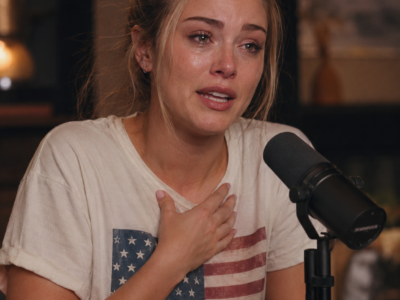
Part 5: The Legacy We Pass Forward
Part 5: The Legacy We Pass Forward
Eighteen years after that Christmas Eve.
Lily was twenty-two, a junior at Columbia University studying psychology and women’s studies. She had the same fierce intelligence but carried it with a quiet confidence that made strangers listen when she spoke. The little girl who once hid behind my leg now led campus workshops on generational trauma and boundary-setting. Her TED Talk from years ago had become required viewing in several college courses.
I watched her from the audience at her latest event: a panel on “Healing While Succeeding.” The auditorium at the Collective was packed with young women, mothers, and a few brave fathers. Alex sat beside me, our fingers intertwined, his presence as steady as it had been since the day he chose us.
Lily spoke last.
“People always ask me if I forgave my aunt Rachel,” she said, voice clear and warm. “The answer is: I released her. Forgiveness isn’t a performance for social media. It’s a private decision. I chose to forgive the version of her that existed in my childhood fear—not because she earned it, but because I refused to let her live rent-free in my heart the way she once lived rent-free in my mother’s penthouse.”
Laughter rippled through the crowd, followed by thunderous applause. She had inherited my sense of timing.
After the event, a group of girls surrounded her. I stepped back, letting her shine. Sarah appeared at my side, older now but still the first person I call in any storm.
“She’s you, but louder,” Sarah whispered, squeezing my arm.
“No,” I replied. “She’s better.”
That night, back in our family brownstone in Brooklyn Heights (we had moved years ago to give Lily more space to grow), we had a quiet dinner. Just me, Alex, Lily, and Mark—who had become a steady, respectful co-parent and even a decent grandfather figure to the stray cats Lily kept adopting.
Lily pushed her plate aside and looked at all of us.
“I’ve been thinking,” she said. “I want to write a book. Not just my story. Our story. But mostly for girls who feel stuck in families that make them feel small. I want to call it Better Doors.”
I felt my throat tighten with pride. “You should. The world needs it.”
She hesitated—the first crack in her confidence that evening. “But there’s one chapter I’m scared to write. The one about whether I should invite Rachel to the launch… if it happens.”
The table went quiet. Alex gave my hand a gentle squeeze, letting me lead.
“You don’t owe her a seat at the table,” I said softly. “But if writing that chapter helps you close it for good, then do it on your terms. Not hers.”
Mark cleared his throat. “For what it’s worth… Rachel’s been in therapy for years. She reached out to me last month. She’s not asking for forgiveness. Just… to know you’re okay.”
Lily nodded slowly. “I’ll think about it.”
Two months later, the book deal came through. A major publisher, a generous advance that went straight into the Foundation’s scholarship fund. The viral machine kicked into high gear again when early excerpts dropped. Clips of Lily reading the opening chapter—“The Night My Mother Emptied the Penthouse”—spread like wildfire across TikTok and Instagram.
The launch event was held where it all began: the Collective headquarters.
Hundreds came. Media. Supporters. Survivors. And, in the very back row, Rachel.
She looked smaller than I remembered. No designer clothes, no superior smile. Just a woman in her fifties holding a copy of the book like a shield. Lily spotted her immediately but continued her reading with grace.
When the Q&A started, Lily addressed the room.
“Someone asked me recently about full-circle moments. This is mine.”
She walked to the back and handed Rachel a signed copy. No hug. No tears. Just a quiet exchange of words only they could hear. Rachel nodded, eyes wet, and left shortly after without causing a scene.
Later, Lily told me what she had said:
“I don’t need your apology anymore. But I hope you’ve found peace. My doors are open for healing—not for history to repeat itself.”
I had never been prouder.
The book became a bestseller. Better Doors topped charts, was translated into twelve languages, and sparked a movement. Schools added it to curricula. The Foundation grew into an international organization with offices in three countries. I stepped into an advisory role, watching the next generation of leaders—many of them young women like Lily—take the helm.
One crisp autumn afternoon, Lily and I returned to the original Tribeca apartment for a rare quiet day. She was packing for a semester abroad in London.
“Mom,” she said as we stood in the living room filled with sunlight and plants, “do you ever miss the old life? The penthouse, the illusion of it all?”
I laughed gently. “Never. I miss nothing that required me to shrink myself. This life—the real one—is everything I fought for.”
She hugged me tightly, the same way she did as a little girl after that first peaceful Christmas.
“Thank you for choosing me. Every single day.”
As she left for the airport the next morning, Alex and I stood on the sidewalk waving. I turned to him, the man who had helped build this beautiful second chapter.
“We did good, didn’t we?”
He kissed my forehead. “We built something that lasts.”
Years from now, when I’m old and gray, I imagine Lily will stand in a similar spotlight. Maybe with her own daughter beside her. She’ll tell the story of a mother who refused to stay silent, who emptied rooms full of poison so new ones could be filled with light.
And somewhere, in the quiet corners of memory, that little five-year-old with the bruised cheek will smile—because she finally learned that she was always worth fighting for.
The penthouse is long gone, transformed into something better.
But the doors?
The doors remain wide open.
The End.