Senegal’s Reported 10-Year Penalty for Same-Sex Relationships Sparks Global Debate on Rights, Culture, and State Power
Senegal’s Reported 10-Year Penalty for Same-Sex Relationships Sparks Global Debate on Rights, Culture, and State Power
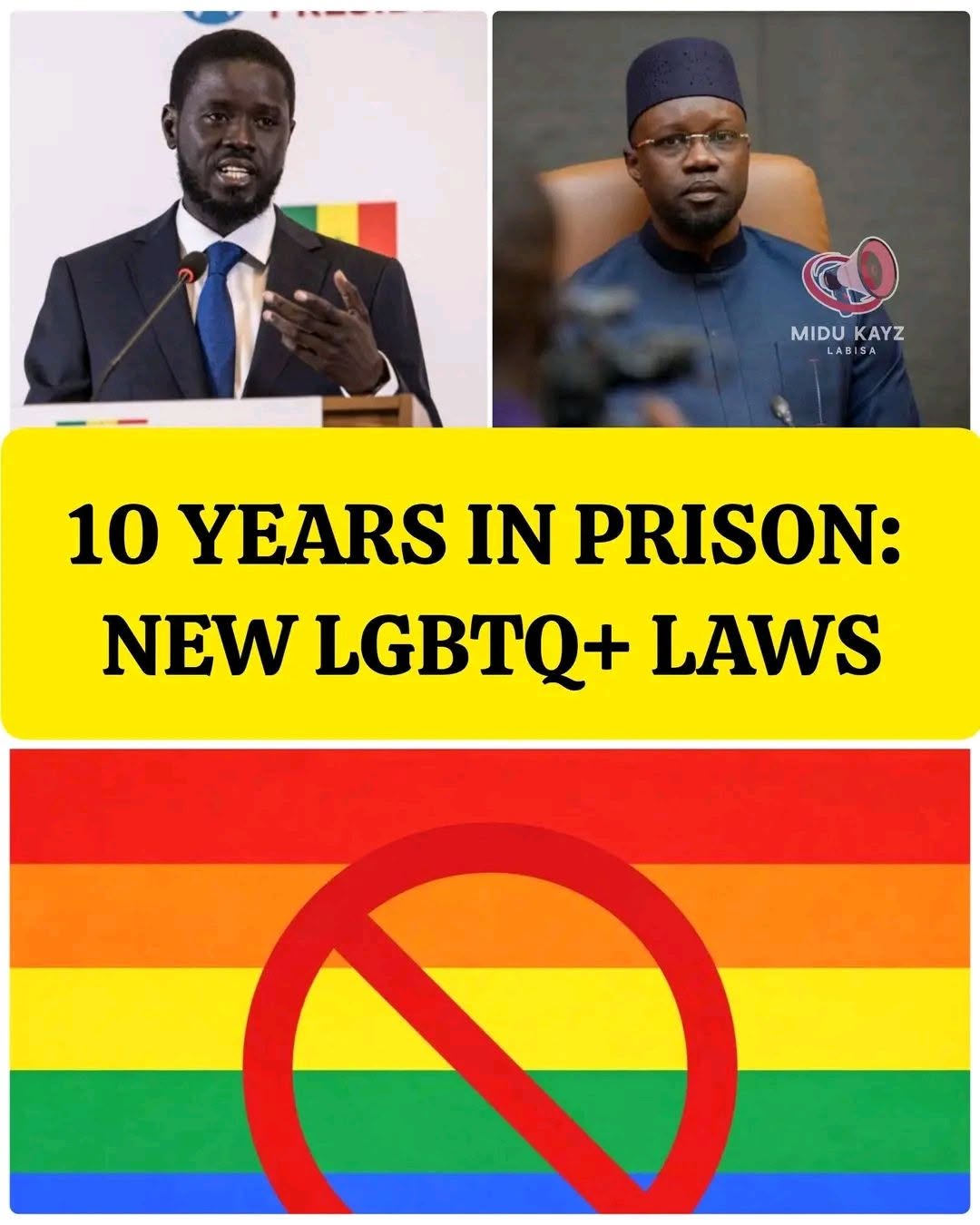
A reported increase in penalties for same-sex relationships in Senegal—allegedly raising the maximum sentence from 5 to 10 years in prison—has ignited renewed international debate about human rights, cultural sovereignty, and the limits of state authority in regulating private life.
While authorities have framed such laws as matters of “public morality” and “cultural protection,” critics argue that criminalizing consensual relationships between adults raises fundamental questions about justice, freedom, and the role of government in personal identity.
A Law That Reopens Old Global Tensions
Across much of the world, laws related to same-sex relationships remain deeply divided. In some countries, legal recognition and protection have expanded significantly over the past decades. In others, same-sex relationships remain criminalized, sometimes with severe penalties.
If confirmed, the reported escalation in sentencing in Senegal would place the country among those with some of the harshest punishments for consensual same-sex relationships.
Human rights organizations argue that such legal frameworks do not merely regulate behavior—they actively shape who is allowed to exist safely within society.
Supporters of strict laws, however, often present a different narrative: that such legislation reflects national identity, religious values, or cultural preservation.
This clash between universal human rights principles and national sovereignty is at the center of the global debate.
Beyond the Individual: Laws That Extend to Supporters
One of the most controversial aspects raised by critics is not only the punishment of same-sex relationships themselves, but also the reported criminalization of those who support or defend LGBTQ+ individuals.
If such provisions are enforced broadly, they could extend beyond private relationships into speech, advocacy, healthcare, and legal protection.
This is where legal debate becomes a deeper societal question:
Should emotional and private relationships between consenting adults fall under criminal law at all?
And where is the line between cultural preservation and state control over personal identity?
“Morality” or Control? Competing Interpretations
Governments that enforce such laws often justify them through references to tradition, religion, or social cohesion.
From this perspective, legislation is seen as a reflection of collective moral standards rather than individual rights.
However, critics argue that morality enforced through imprisonment shifts from cultural expression into state power over personal autonomy.
As one common argument in human rights discourse states:
If a value requires imprisonment to be maintained, it may reflect control rather than morality.
This framing has become central to global criticism of anti-LGBTQ+ legislation.
The Human Cost Behind Legal Language
Legal texts often speak in neutral terms: penalties, statutes, enforcement mechanisms.
But behind those terms are human lives—people who may face long prison sentences not for acts of violence or harm, but for consensual relationships.
Advocates emphasize that the issue is not only legal, but deeply human:
Fear of arrest
Social isolation
Loss of family support
Silence imposed on entire communities
In such environments, identity itself can become something people are forced to hide rather than express.
A Global Question, Not Just a Local One
While this debate is centered on Senegal, it reflects a broader global tension.
Different societies are currently negotiating where they draw boundaries between:
cultural tradition
religious interpretation
international human rights frameworks
and individual freedoms
There is no single global consensus. But there is an ongoing, increasingly visible conflict between these perspectives.
The Core Question Raised by Critics
At the heart of the controversy lies a moral question that extends beyond law and politics:
Should two consenting adults face imprisonment simply for loving each other?
For supporters of LGBTQ+ rights, the answer is a firm no.
For defenders of restrictive laws, the answer is often tied to cultural preservation and social order.
The gap between these positions is not only legal—it is philosophical.
Conclusion: A Debate That Is Far From Over
Whether viewed through the lens of culture, religion, law, or human rights, the reported escalation of penalties in Senegal has reignited a global conversation that shows no sign of resolution.
At its core, the issue forces societies to confront uncomfortable questions about power:
Who defines morality?
Who decides what love is allowed?
And how far should the law go in regulating private life?
As the world continues to evolve in different directions on LGBTQ+ rights, one thing remains clear: this debate is not ending anytime soon.
It is becoming sharper, louder, and increasingly global.